


Summarize this blog post with:
TLDR
For modern sales teams, WhatsApp business automation delivers the highest ROI when applied to lead response, follow-up sequences, and customer onboarding. Automate these three workflows first before scaling to broadcast campaigns or advanced CRM-triggered pipelines.
Stop losing deals to slow response times. Sales teams today are managing hundreds of leads, follow-ups, and customer queries simultaneously, and manual messaging simply can't keep up. Missed replies mean missed revenue.
WhatsApp business automation changes that equation entirely. Instead of chasing leads manually, your team can trigger instant responses, send timely follow-ups, and qualify prospects automatically, all without adding headcount.
The numbers back it up: WhatsApp boasts a 98% open rate, making it the highest-performing channel for sales communication. When you layer automation on top of that reach, every lead gets acknowledged, every follow-up lands on time, and no opportunity slips through the cracks.
In this guide, you'll get a practical playbook for using WhatsApp business automation to generate leads, run drip campaigns, onboard customers, and track measurable outcomes, starting today.
Why WhatsApp Business Automation Drives the Best Results?
Speed wins deals. Research consistently shows that leads contacted within five minutes of inquiry are dramatically more likely to convert than those reached even an hour later. WhatsApp business automation makes that five-minute window the default, not the exception.
Here is what sales teams consistently experience after implementing WhatsApp automation:

- Faster lead responses and higher engagement: Automated triggers fire the moment a lead fills a form, clicks an ad, or visits a pricing page. There is no waiting for a rep to log in, check the queue, or compose a reply. The conversation starts immediately, which is exactly when the prospect's intent is highest.
- Consistent follow-ups without manual effort: Most deals don't close on the first touch. Sales automation ensures your follow-up sequence runs like clockwork, day two, day five, day ten, without a rep having to manually remember or reschedule every single message. Consistency becomes a system, not a discipline.
- Better alignment with CRM data and sales pipelines: WhatsApp automation tools that integrate with your CRM can pull in contact data, deal stage, and activity history to send contextually relevant messages. A lead in the evaluation stage receives comparison content. A prospect who viewed the pricing page gets a timely check-in. The right message reaches the right person automatically.
- Personalized, timely communication at scale: Automation does not mean generic. With dynamic fields and segmentation, you can address contacts by name, reference their industry, and tailor content to their specific pain point, across thousands of conversations simultaneously.
How Does WhatsApp Lead Generation Work?
Lead generation has always been about reaching the right person at the right moment. WhatsApp automation compresses that timeline and dramatically increases the chances of a meaningful first interaction.
1) Transforming lead capture with automation
Traditional lead capture involves a form submission, a delay, an email that may or may not get opened, and eventually a call that often goes unanswered. WhatsApp flips this entirely.
2) Click-to-WhatsApp ads
These are among the most powerful lead generation tools available to modern sales teams. A prospect clicks an ad on Facebook or Instagram, and instead of landing on a form, they are dropped directly into a WhatsApp conversation.
3) Landing page opt-ins
Adding a WhatsApp opt-in button to your landing pages gives prospects an alternative to email, one they are far more likely to engage with. A simple "Chat with us on WhatsApp" CTA can trigger an automated welcome sequence, deliver a lead magnet, or begin a qualification flow immediately after the opt-in.
4) Triggered messages based on behavior
Automation allows you to respond to intent signals in real time. A prospect who revisits your pricing page three times can automatically receive a WhatsApp message offering a demo. Someone who abandons a checkout can receive a gentle nudge with a discount code.
5) Shortened sales cycles and higher engagement
Because WhatsApp conversations are immediate, two-way, and informal, prospects are more willing to engage, ask questions, and move through the sales funnel faster. Sales teams that automate their first-response and initial qualification steps on WhatsApp consistently see shorter average sales cycles and higher engagement rates than email-only workflows.
Top 3 WhatsApp Business Automation Tools for 2026
Choosing the right tool is critical. The platform you select determines how effectively you can automate, scale, and measure your WhatsApp sales workflows. Here are the top three tools worth evaluating in 2026.
Comparison Overview
1. HelloSend – Best All-Round WhatsApp Business Automation Solution
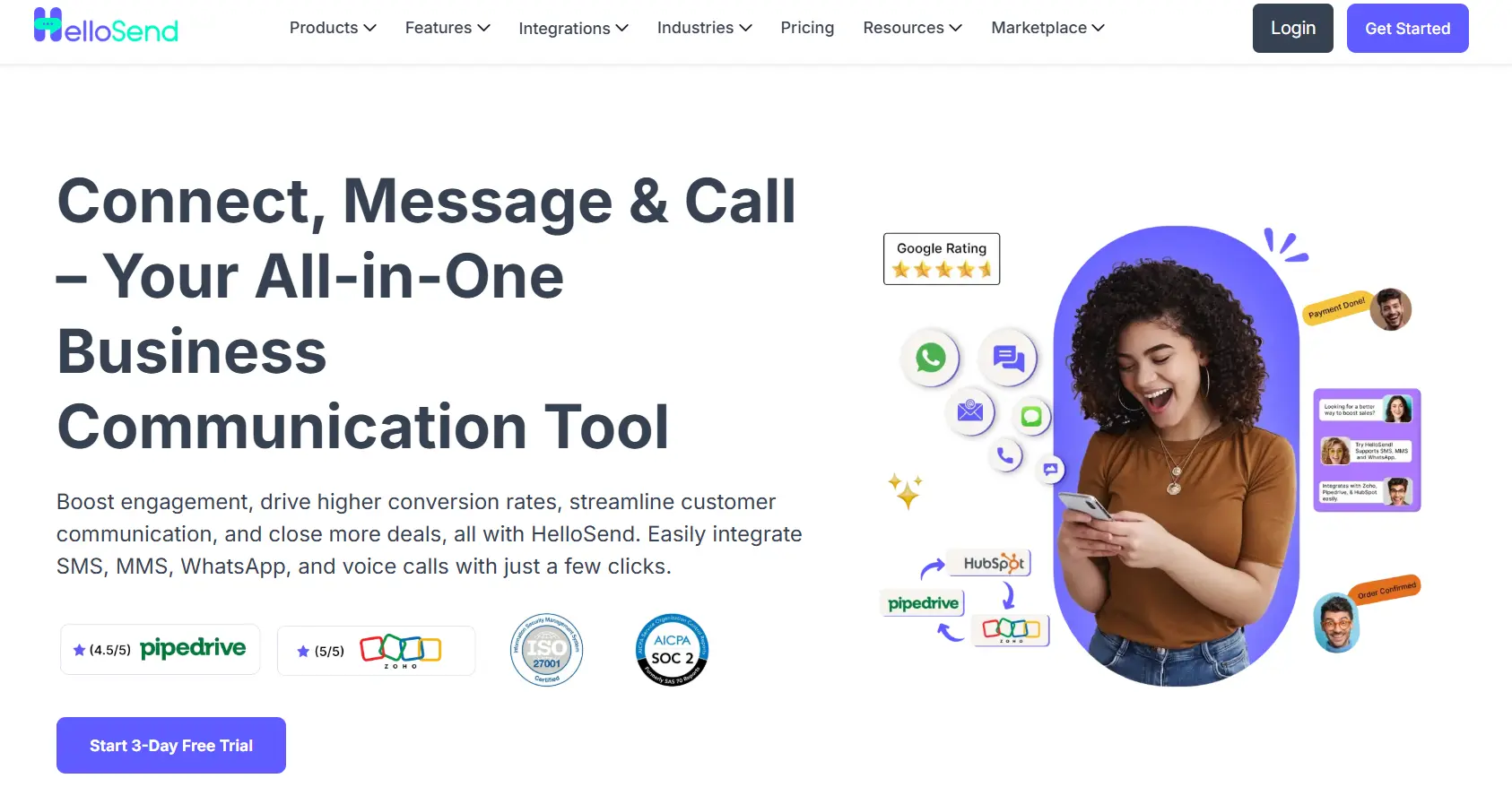
For sales teams serious about scaling, HelloSend is the clear frontrunner. It is purpose-built for WhatsApp business automation at the sales workflow level, not just messaging, but full pipeline integration.
Its CRM integrations are among the most robust in the market, connecting seamlessly with major platforms to ensure every automated message is informed by real data.
Sales reps always enter conversations with context, and automated messages never feel out of place.
In addition to WhatsApp Automation, HelloSend also provides SMS Automation and Voice Call Support.
Top Features Of HelloSend
HelloSend Pricing
HelloSend offers flexible pricing plans tailored to businesses of all sizes, ensuring you pay only for the features you need. To learn more about the available options, check out HelloSend's pricing plans now.

2. WATI
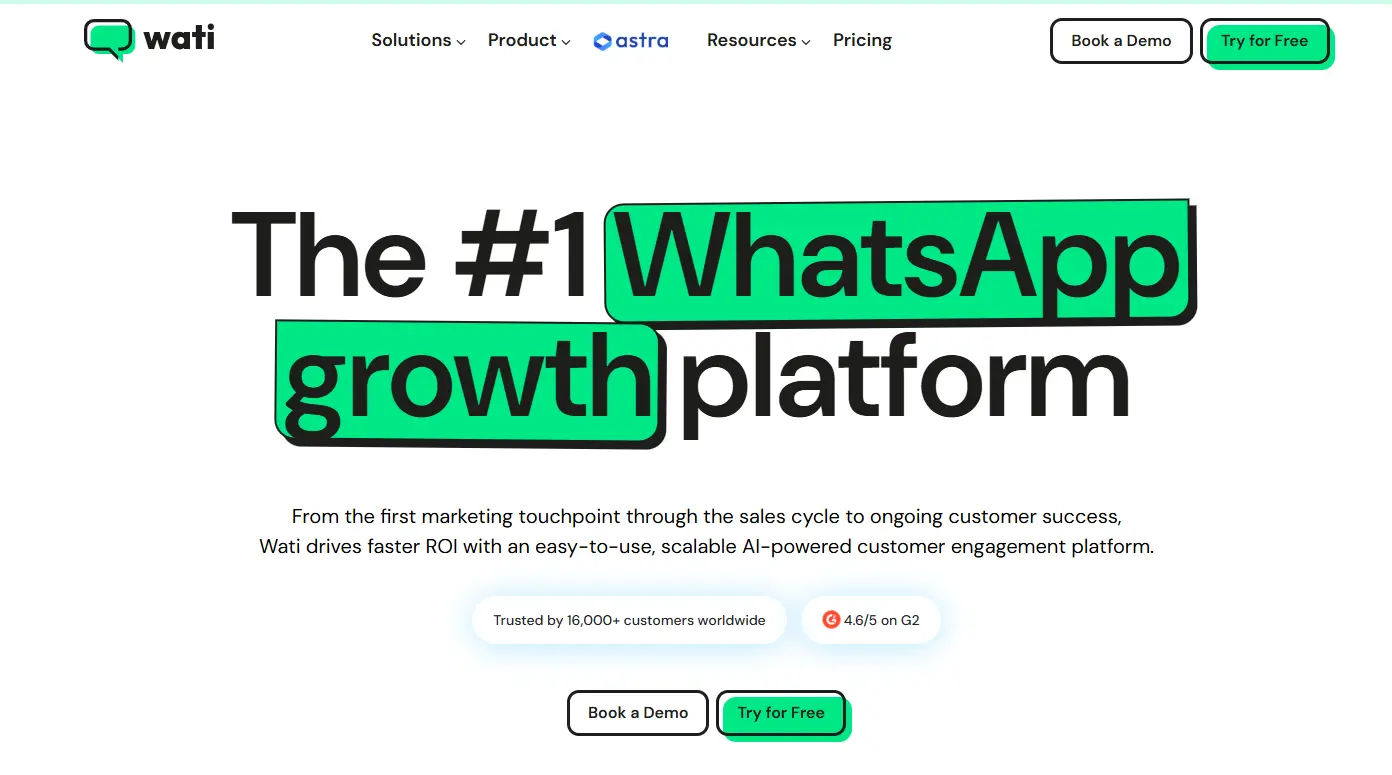
WATI is a well-established name in the WhatsApp automation space, particularly popular among small to medium-sized businesses looking for a quick, accessible setup.
Its shared team inbox is its strongest feature, allowing multiple agents to manage WhatsApp conversations collaboratively so leads don't fall through the cracks. No-code automation builder makes it relatively straightforward to set up basic chatbot flows and broadcast messages.
- However, WATI's limitations become apparent as teams scale. Its CRM integration capabilities are narrower than HelloSend's, and its analytics dashboard provides limited insight into sales-specific metrics.
- Teams that need sophisticated segmentation, behavior-triggered automation, or deep pipeline integration will likely find WATI constraining over time.
3. ManyChat
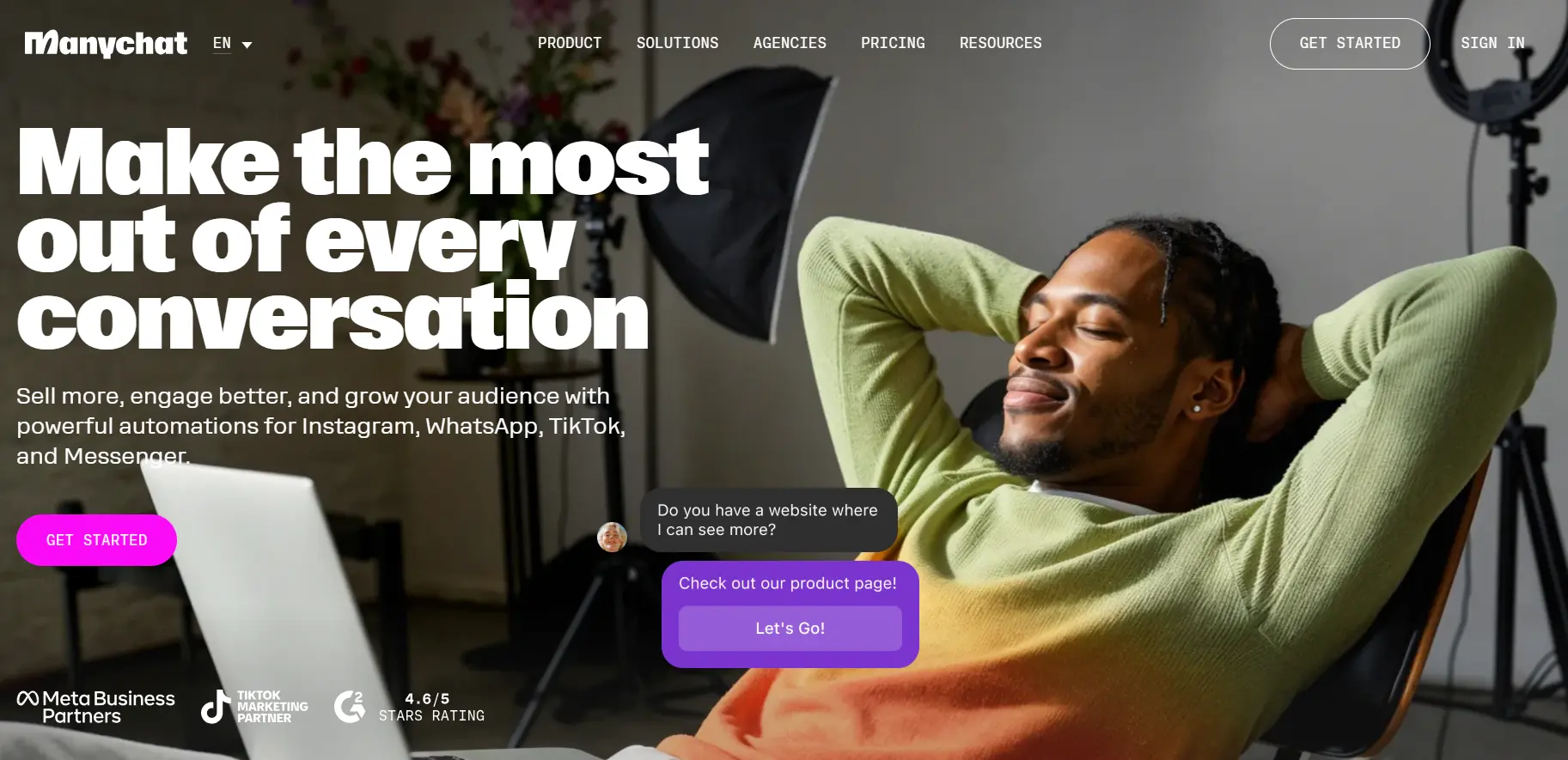
ManyChat offers a robust visual flow builder and an intuitive interface for WhatsApp automation, making it popular among marketing teams focused on conversational engagement.
Its strengths lie in FAQ automation, lead-capture conversations, and triggered-response flows, which are useful for top-of-funnel engagement.
- For teams primarily focused on chatbot-style interactions rather than full sales pipeline management, ManyChat offers reasonable flexibility.
- That said, ManyChat is not purpose-built for sales teams. Its CRM integrations are more limited, its pipeline-stage awareness is minimal, and its reporting lacks the sales-specific metrics that serious revenue teams need.
Best Practices for Implementing WhatsApp Automation in Sales
1) Choose the right triggers and automation rules
Not every action should fire a message. Be intentional, trigger automations based on meaningful signals: form submissions, deal stage changes, link clicks, time-based follow-ups. Random or excessive triggers quickly feel like spam and damage the relationship before it begins.
2) Align automation with sales stages
Map your automation sequences to your actual sales process. A lead in the awareness stage needs different content than one in the decision stage. Sending the same generic message to your entire list regardless of where they are in the funnel is the fastest way to erode engagement. Let your pipeline stages drive what gets sent and when.
3) Personalize at scale without spamming
Use dynamic fields to include names, company names, and relevant details in every message. Keep sequences spaced appropriately; a follow-up every 48 to 72 hours is reasonable; daily messages are intrusive. Give prospects clear opt-out options and respect them immediately. Earning permission is what makes WhatsApp automation sustainable.
4) Measure performance consistently
The metrics that matter most are response rate, conversation-to-meeting rate, message open rate, and ultimately, conversion lift attributable to automated touchpoints. Set baseline benchmarks before you launch any sequence and review performance weekly. Automation that is not measured isn't optimized.
Final Words!
Sales teams that embrace WhatsApp business automation are not just saving time; they are fundamentally changing how they compete.
By automating lead capture, first responses, follow-up sequences, and customer onboarding, teams can engage more prospects, maintain consistent communication, and move deals through the pipeline faster than manual effort ever allows.
The results are measurable: shorter sales cycles, higher volumes of qualified leads, reduced response times, and stronger customer retention from day one. WhatsApp's unmatched engagement rates make it the right channel; automation makes it scale.
The question is no longer whether to automate your WhatsApp sales workflow; it is how quickly you can get started.
If you are ready to build a faster, more consistent, and more productive sales operation, explore HelloSend, the best WhatsApp business automation solution, and see how its purpose-built automation features can transform your pipeline today.

FAQs
1) What is WhatsApp business automation?
WhatsApp business automation refers to the use of software tools to automatically send, receive, and manage WhatsApp messages based on predefined triggers and workflows. For sales teams, this includes automated lead responses, follow-up sequences, qualification flows, and customer onboarding messages, all running without manual intervention.
2) Can WhatsApp automation help with lead generation?
Absolutely. WhatsApp automation significantly improves lead generation by enabling instant responses to opt-ins, running click-to-WhatsApp ad campaigns, and delivering behavior-triggered nurture sequences. Because WhatsApp has dramatically higher open rates than email, automated lead-generation flows on the platform consistently outperform those in traditional channels.
3) How do automated WhatsApp messages improve sales outreach?
Automated WhatsApp messages ensure every lead receives a timely, relevant touchpoint, regardless of how large the pipeline is or how stretched the sales team is. They eliminate response delays, maintain consistent follow-up cadences, and deliver personalized content based on CRM data, all of which increase the likelihood of conversion.
4) How Does Customer Onboarding Automation Help?
Customer onboarding automation delivers structured welcome messages, product walkthroughs, and educational drip content automatically from the moment a deal closes. It ensures every onboarding step is completed on time and consistently across your entire customer base without relying on reps to follow up manually.
5) How Can You Automate Sales Conversations?
You can automate sales conversations by setting up trigger-based workflows that handle qualification questions, product recommendations, and follow-ups in response to prospect behavior. Integrating WhatsApp automation with your CRM ensures every automated reply is informed by real deal data, making conversations feel contextual rather than generic.





.webp)
