


Summarize this blog post with:
Quick Summary
While SMS marketing guarantees delivery, WhatsApp marketing offers multimedia, automation, and interactive features, making it better suited for businesses focused on personalized, dynamic customer engagement.
Your message was delivered. Your competitor's converted. Same audience. Same offer. Different channel. That is the gap most messaging strategies refuse to confront, and it is the gap that quietly cuts into campaign ROI, inflates customer acquisition costs, and hands market share to businesses that simply made a smarter channel decision.
Here is the reality: in the debate around SMS vs WhatsApp marketing, both channels deliver open rates that email could never dream of. SMS has a remarkable 98% read rate, while WhatsApp messages achieve a 95% read rate.
Yet most businesses are only using one of them. That is leaving serious revenue on the table.
This blog breaks do0wn how SMS and WhatsApp marketing compare in terms of reach, engagement, and automation. So you can make the right call for your business.
Why SMS Marketing Still Works?
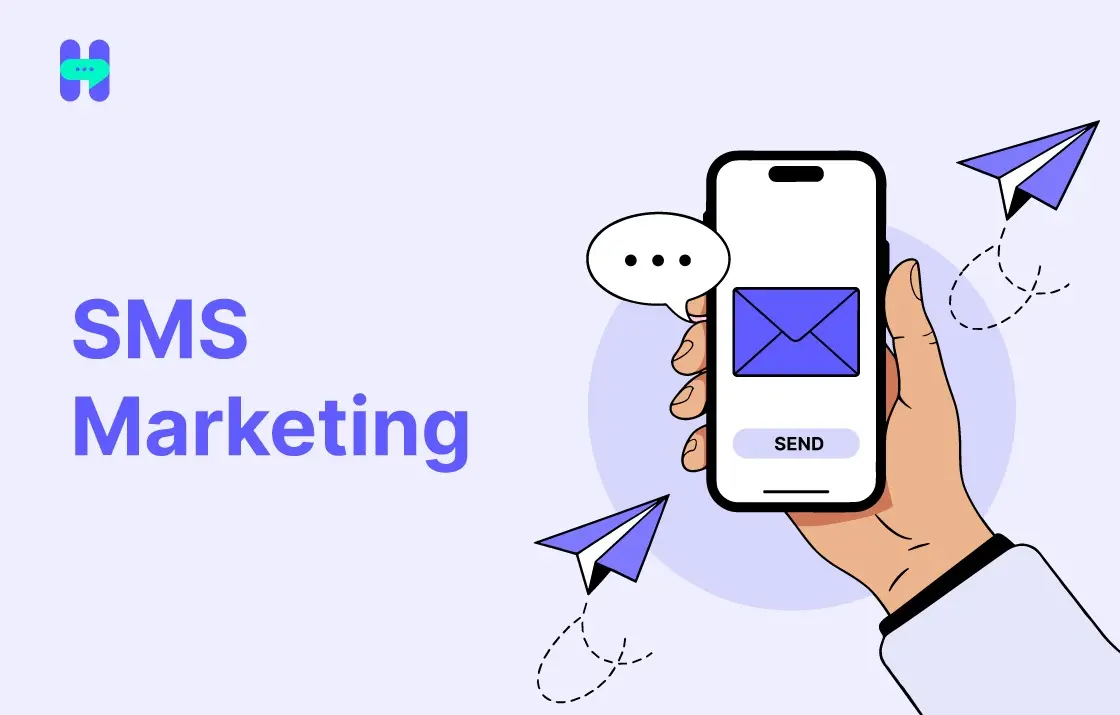
SMS marketing still works because it reaches customers instantly on a device they check many times a day. Unlike crowded email inboxes or social media feeds, text messages are simple, direct, and hard to ignore.
When businesses send relevant and timely messages, SMS becomes a powerful way to drive quick engagement and responses.
Key Advantages of SMS Marketing
- High deliverability. SMS does not compete with an algorithm, a spam filter, or a crowded app inbox. Once sent, messages are delivered directly to the recipient's native messaging app, making it one of the most reliable delivery channels. Also, utilizing SMS marketing automation can work instantly for your business.
- Cost-effective at scale. For businesses sending large volumes of transactional messages, think 50,000 appointment reminders a month, per-message SMS pricing is often more economical than conversation-based pricing models.
Limitations of SMS Marketing
- Character limits restrict creativity. The 160-character limit makes it difficult to tell a compelling story, showcase a product visually, or include multiple CTAs. MMS helps, but adds cost and complexity.
- Strict compliance requirements. In the United States, SMS marketing is governed by the Telephone Consumer Protection Act (TCPA), which requires express written consent before sending any promotional messages. Violations carry significant financial penalties.

What Makes WhatsApp Marketing Effective?

WhatsApp marketing is effective because it enables businesses to communicate with customers in a more personal and conversational way. Messages feel natural and interactive, which helps build stronger customer relationships and trust.
It also allows brands to share updates, support, and promotions instantly, making communication faster and more engaging.
Key Advantages of WhatsApp Marketing
- Rich media support. WhatsApp allows businesses to send images, videos, PDFs, audio messages, interactive buttons, product carousels, and catalog links all within a single conversation thread. This is a capability SMS simply cannot match natively.
- True two-way conversations. WhatsApp is built for dialogue. Customers can reply, ask questions, and complete purchases all within the same thread, without being redirected to another channel. You can use WhatsApp Business CRM to streamline your work.
Limitations of WhatsApp Marketing
- Requires internet access and the app. Unlike SMS, WhatsApp messages cannot be received without an active internet connection and the WhatsApp app installed. In markets with lower smartphone penetration, this limits reach.
- Limited penetration in key markets. In the United States, Canada, Japan, and South Korea, WhatsApp usage remains significantly lower than in the rest of the world. A purely WhatsApp-based strategy in these markets will miss a substantial portion of your audience.

SMS vs WhatsApp Marketing: Head-to-Head Comparison
Let us put both channels side by side across the metrics that matter most to your business.
The Four Business Variables That Should Determine Your Channel
The best channel is not the most popular one; it is the one your audience actually uses and responds to. Here is how to think through that decision systematically.

1) Your Target Audience's Geography and Demographics
Geography is often the single most decisive factor. If your primary audience is based in the US, Canada, or Australia, SMS provides a safer, broader reach given lower WhatsApp penetration in these markets.
2) Your Messaging Volume and Budget
For businesses sending more than 10,000 SMS texts per month, per-message SMS pricing is usually more cost-effective than per-conversation WhatsApp pricing, especially when those messages are short and do not require a response.
3) Your Existing Tech Stack and CRM
The channel you choose is only as powerful as the infrastructure behind it. A WhatsApp or SMS tool that operates in isolation from your CRM means your team is managing conversations without deal context, contact history, or automated follow-up, the very things that turn a touchpoint into a conversion.
4) Compliance Requirements in Your Industry and Region
Before committing to either channel at scale, map your compliance obligations. US-based businesses sending SMS promotions must maintain TCPA-compliant opt-in records for every contact. EU businesses must comply with GDPR standards across both channels. WhatsApp adds a layer of template pre-approval from Meta, which, while adding a step, provides useful guardrails.
Running Both Channels Without Building Two Separate Operations

Here is the operational reality most omnichannel strategies run into: managing SMS and WhatsApp as separate systems does not just double your tooling, it doubles your team's cognitive load, fragments your customer data, and creates the exact kind of disconnected experience that erodes the trust you are trying to build.
The revenue cost of that fragmentation is real. Customers who receive inconsistent communication across channels churn faster, convert at lower rates, and require more touchpoints to close, directly inflating your customer acquisition cost and compressing your margins on every deal in your pipeline.
HelloSend is built to close that gap.
HelloSend is not another standalone SMS tool. It is not a basic WhatsApp automation platform. It is a unified SMS, WhatsApp, and Voice call solution that lives directly inside the CRM your team already uses, Zoho CRM, HubSpot, Pipedrive, and more. Every customer conversation, across every channel, in one place, with full contact history and deal context attached.
What that means for your business in practice:
- Your team stops switching between platforms to piece together a customer's communication history. Automation triggers run across both SMS and WhatsApp, based on actual customer behavior, not manual scheduling.
- Campaign performance across both channels is visible in a single dashboard, which means optimization decisions get made faster and with better data. And when a customer needs to be called, your team can do it with one click, directly from the CRM, with the call automatically logged against the contact record.
- The result is not just operational efficiency. It is revenue visibility. Every touchpoint, SMS, WhatsApp, and voice is connected to a contact, a deal stage, and a conversion outcome. You are no longer guessing which channel drove a sale. You know. So, utilize the power of this Omnichannel Messaging Platform: HelloSend.
Key HelloSend Features That Make Omnichannel Easy
Hellosend Pricing Plans
HelloSend offers straightforward pricing plans designed to fit businesses of all sizes, from small teams just getting started to growing companies that need SMS, WhatsApp, and voice calling under one roof.
Every plan includes core features like unified messaging, workflow automation, campaign management, and CRM integrations from day one. Explore the full plan breakdown on the HelloSend Pricing Page and start with a 3-day free trial — no credit card required.

Which One Should You Choose: SMS or WhatsApp?
Still want a straight answer? Here is your decision guide.
Choose SMS if…
- Your audience is primarily based in the US, Canada, or Australia
- You can set SMS Automation to send high-volume transactional messages, OTPs, confirmations, and reminders, where speed and reliability matter more than richness.
- A significant portion of your customers are older demographics or are in areas with limited internet access.
- You need guaranteed delivery regardless of whether the customer has a particular app installed.
- Your per-message budget is tight, and cost-per-message efficiency is the primary metric.
Choose WhatsApp if…
- Your audience is concentrated in India, LATAM, Europe, or MENA, where WhatsApp is the dominant messaging channel.
- Your campaigns rely on rich media, interactive buttons, product catalogs, or document sharing with WhatsApp Marketing Messages.
- You are running mid-funnel nurturing campaigns, post-sale engagement flows, or customer success sequences where conversation quality matters.
- Your customers skew toward Millennials or Gen Z, who expect conversational, two-way brand communication.
- Conversion rate is your primary metric, and you need the channel most likely to drive action from a message.
Choose Both — and We Recommend You Do — if…
- You have a customer base that spans multiple geographies or demographics
- You want full-funnel coverage, from the first transactional touchpoint through to long-term retention
- You are already operating within a CRM and want your messaging tightly integrated with your contact and deal data
- You want a messaging strategy that is built to scale with your business rather than hitting a ceiling when you grow
What's Next?
The debate around SMS vs WhatsApp marketing is real and for good reason. Both channels are genuinely powerful. Both deliver open rates that email cannot touch. Both have clear use cases where they excel and clear limitations where the other channel picks up the slack.
But the most important insight from this entire comparison is this: the businesses winning at customer communication in 2026 are not the ones that picked the right channel. They are the ones that stopped treating this as a choice and built a strategy that uses both intelligently, with the right message on the right channel at the right moment in the customer journey.
HelloSend makes that possible. One platform. SMS, WhatsApp, and Voice. Built directly into the CRM your team already uses. No new tools. No data silos. No channel confusion.
Stop choosing between SMS and WhatsApp. With HelloSend, you do not have to. Run both channels from a single unified inbox inside the CRM you already use.
Start Your Free 3-Day Trial - no credit card required!
FAQs
1) What is the main difference between SMS marketing and WhatsApp marketing?
SMS sends plain text messages to any mobile device without needing an app or internet, while WhatsApp sends rich media messages, requiring the app and internet.
2) Which has a higher open rate—SMS or WhatsApp?
Both SMS and WhatsApp have 98% open rates, but WhatsApp has higher conversion rates (45-60%) compared to SMS (20-35%).
3) Is WhatsApp marketing better than SMS for small businesses?
It depends on location and audience. WhatsApp is popular in regions such as India, LATAM, and Europe, while SMS has a broader reach in the US, Canada, and Australia.
4) Can I use both SMS and WhatsApp marketing at the same time?
Yes, using both together is effective. SMS handles high-volume messages, while WhatsApp supports customer engagement with richer content.
5) Which tool is best for running both SMS and WhatsApp campaigns together?
HelloSend allows businesses to manage both SMS and WhatsApp campaigns from a single platform, integrating with CRMs such as Zoho, HubSpot, and Salesforce. Try now!


.webp)
