Summarize this blog post with:
Quick Summary
Patients now research providers online before they book, so a modern marketing strategy for healthcare services has to combine trust, personalization, and multi-channel outreach. This guide breaks down the components of effective healthcare marketing solutions, the tools that support them, and a real-world example of ROI. Use it to build or audit your organization's approach for 2027.
In 2027, healthcare marketing will be more complex than ever. As patients shift toward digital-first experiences, healthcare organizations need marketing strategies for healthcare organizations that prioritize engagement, trust, and accessibility.
77% of patients now use the internet to research healthcare providers before booking an appointment.
As healthcare continues to grow, it's more necessary than ever for healthcare marketers to change their strategies to meet the changing needs of their audiences.
In this blog, we'll dive into the key components of a successful healthcare marketing strategy and share examples and tactics that work today.
Let's get into it.
Why Does Healthcare Marketing Require A Unique Approach?
Healthcare marketing differs from other industries due to its unique challenges and regulatory needs. The sensitive nature of healthcare services demands that marketers prioritize trust and clear communication.
Challenges Specific To Healthcare
- Marketing strategies in healthcare industry must comply with strict regulations, such as the HIPAA (Health Insurance Portability and Accountability Act) and other privacy laws.
- Trust is paramount, and any breach of sensitive information can have severe legal and legal consequences for the organization's reputation.
- Additionally, healthcare marketers need to balance the need for results with honest marketing.
- While engaging patients and growing the practice is essential, healthcare marketing must always focus on patient welfare and well-being.
What Makes A Healthcare Marketing Strategy Effective Today?
The strongest healthcare marketing solutions share two traits: patient-centered messaging and coordinated multi-channel outreach.
Here's what that looks like in practice.

1) Patient-Centered Messaging
Understanding patient behavior and expectations is essential. Today's healthcare consumers expect more than just a service they seek a partner in their health journey. For this you can pick automated texting software.
Personalization is the core principle behind any effective marketing strategy in a healthcare playbook. Tailoring content to specific needs, preferences, and life stages drives engagement and builds the trust patients are looking for.
2) SEO And Local Search Optimization
When patients search for healthcare services, they often begin with local queries like "dentists near me" or "best pediatrician in [city]." Ranking well for these local search terms is crucial for healthcare organizations.
The key to regional search optimization is ensuring that your website is optimized for local SEO and your business is listed accurately in local directories such as Google My Business. In this way, you can do good medical marketing for your healthcare business.
3) Utilizing Social Proof And Testimonials
Patient reviews, testimonials, and case studies are among the most powerful marketing tools. People trust the experiences of others, especially when it comes to healthcare services.
Studies show that 92% of consumers trust recommendations from others over traditional advertising.
4) Multi-Channel Outreach
A modern healthcare marketing strategy involves engaging patients across multiple touchpoints, including SMS, email, social media, and in-app messaging. And utilizing the power of omnichannel platform will be beneficial for your business.
Multi-channel outreach ensures you can reach your target audience wherever they are, increasing the likelihood of engagement and conversions.
5) CRM And Data-Driven Personalization
Customer Relationship Management (CRM) systems help healthcare marketers gather and analyze patient data to deliver personalized, timely communications.
By segmenting audiences based on their preferences, behaviours, and interactions, healthcare organizations can send relevant content and offers that resonate with each patient.
Must-Have Elements In A Healthcare Marketing Plan
To execute an effective healthcare marketing strategy, it's crucial to have a clear plan in place.
Here are the essential elements of a healthcare marketing plan:
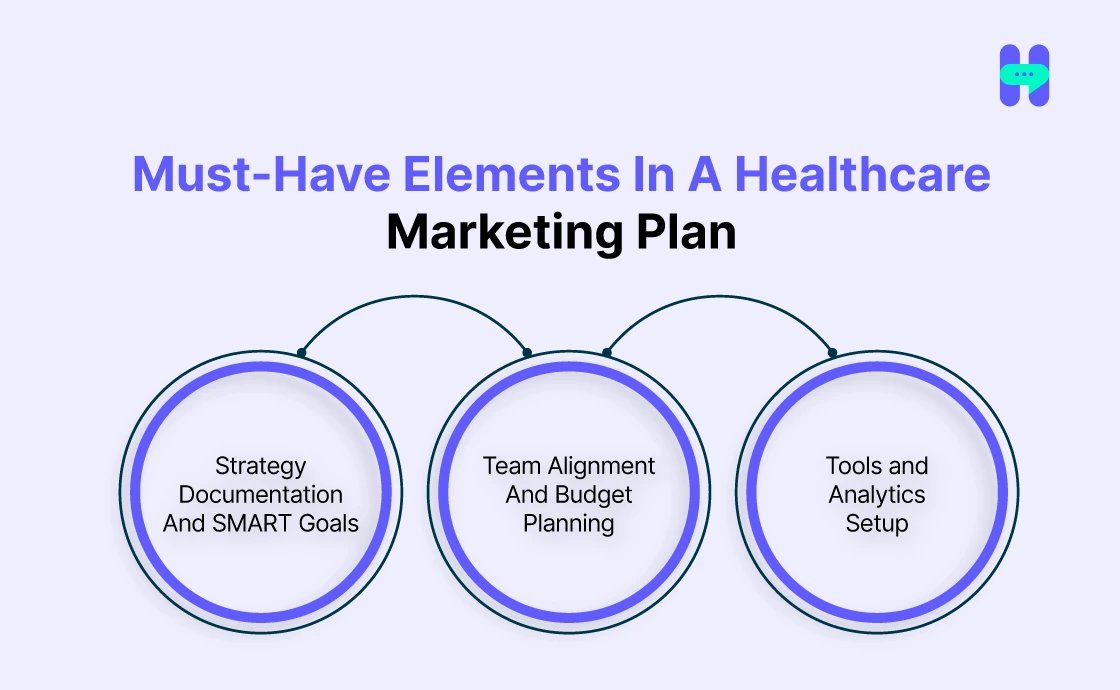
1) Strategy Documentation And SMART Goals
Clearly define your objectives using SMART (Specific, Measurable, Achievable, Relevant, Time-bound) goals. These goals will guide all marketing efforts and help measure success. It will also help you to improve customer relation.
2) Team Alignment And Budget Planning
Align your team's efforts toward a common goal, ensuring that every department from marketing to patient care—is on the same page. Establish a marketing budget that supports the execution of your strategies.
3) Tools And Analytics Setup
Ensure you're using the right tools, including CRM platforms, marketing automation tools, and analytics dashboards, to track and measure your marketing activities. Analytics will provide insights into campaign performance and guide future marketing decisions.
Explore Proven Healthcare Marketing Techniques
Now that we've outlined the essential elements of a healthcare marketing strategy, let's explore some proven techniques that deliver results.
- Digital Ads and Video Marketing: Paid search ads and video marketing campaigns allow healthcare organizations to target specific keywords and demographics, ensuring they reach the right audience. This is a form of online medical marketing.
- Wellness Education Campaigns: Educating patients about health issues, preventive care, and healthy living through blogs, videos, and social media posts positions your practice as a trusted resource.
- Influencer Collaboration: Influencers in the healthcare space, whether doctors, nutritionists, or fitness experts, can help build credibility and attract new patients. By watching influencers, your customers will trust you, and this will boost customer retention.
3 Tools To Boost Your Messaging Strategy In Healthcare
Effective communication is the cornerstone of any successful healthcare marketing strategy.
The top three tools can help healthcare organizations improve their messaging and patient outreach.
1. HelloSend – Best for Healthcare Patient Messaging
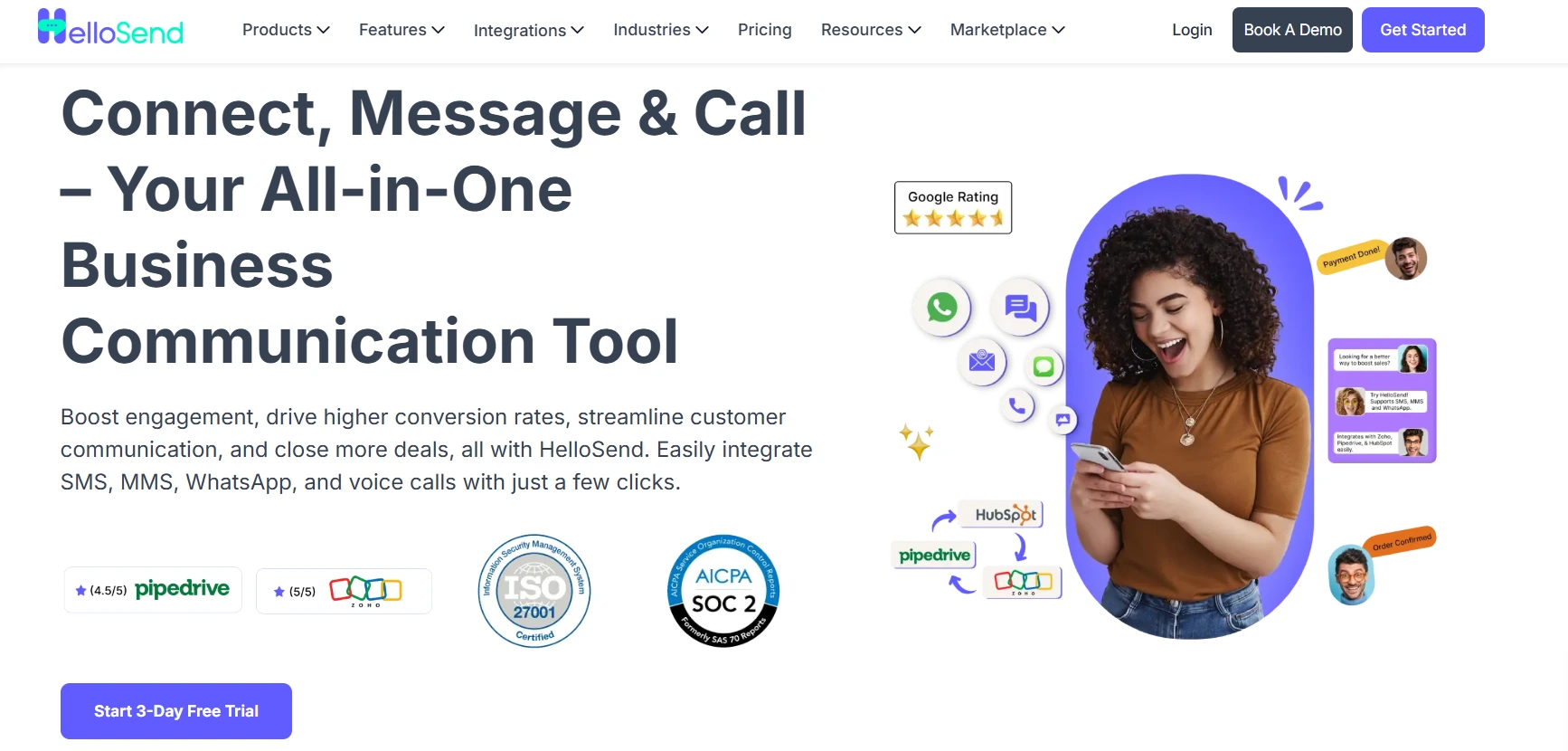
HelloSend is a CRM-based omnichannel platform that brings SMS, rich media messaging, WhatsApp, and voice calling into one system, so a front desk team stops switching between four different tools to reach one patient. It connects natively to Zoho, HubSpot, Pipedrive, Salesforce, Zendesk, and Microsoft Teams, and it also runs as a standalone dashboard for practices that are not on one of those five CRMs yet.
Let's look into its features:
Key Features:
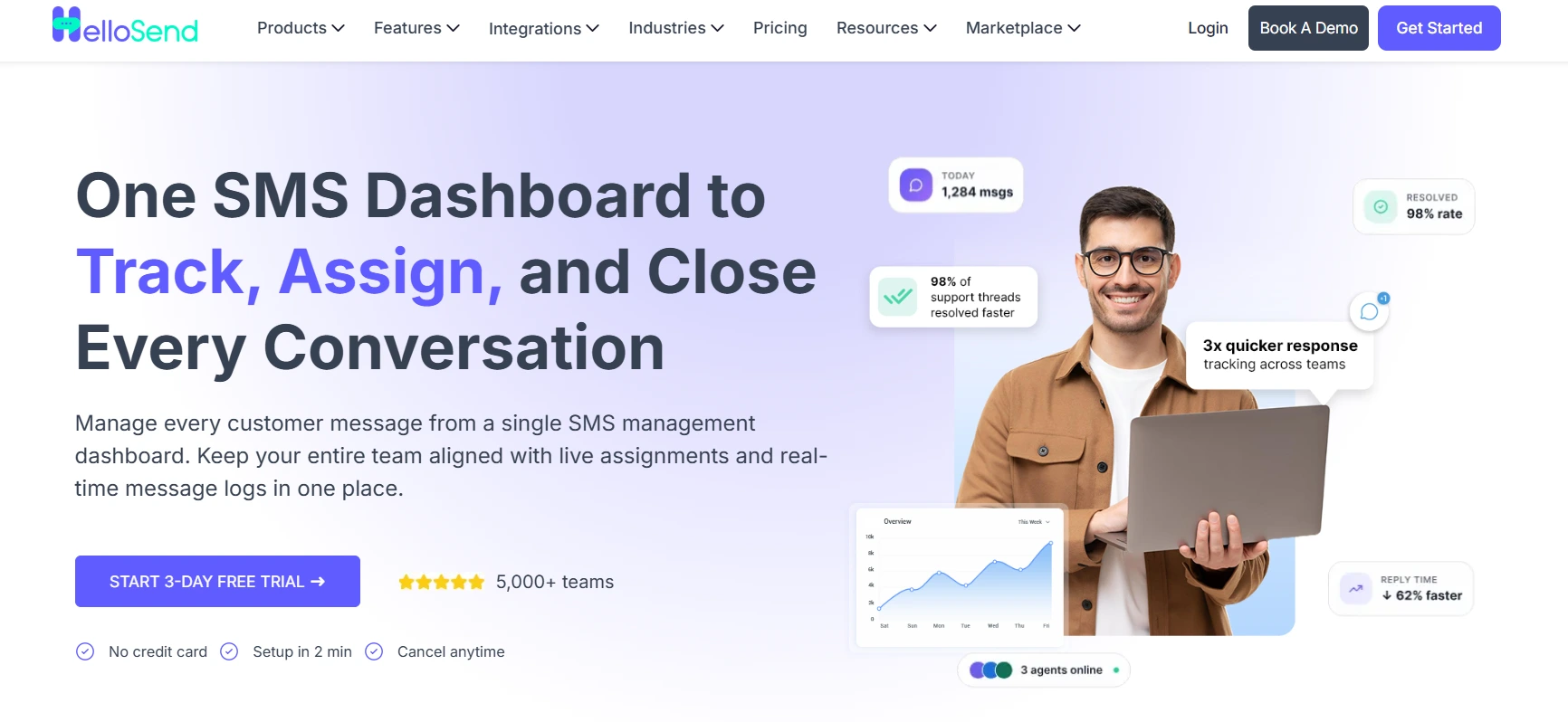
- Unified inbox. SMS, WhatsApp, and voice conversations sit in one thread per patient, so staff never restart a conversation from scratch.
- Rich media messaging. Send appointment cards, intake forms, and visit summaries as images or PDFs, not just plain text.
- One-click calling. Call directly from a patient record, with automatic logging and call history attached.
- Workflow automation. Reminders and follow-ups fire automatically when a CRM record changes, no manual sending required.
- Native CRM sync. Every message and call links back to the patient record in Zoho, HubSpot, Pipedrive, Salesforce, or Zendesk.
HelloSend is not a CRM, and it will not replace one. Practices already running patient records through one of those five systems get the most value, since every message syncs straight back to that record. Practices without a CRM in place can still run HelloSend on its own as a standalone messaging system, just without that sync.
Integration:
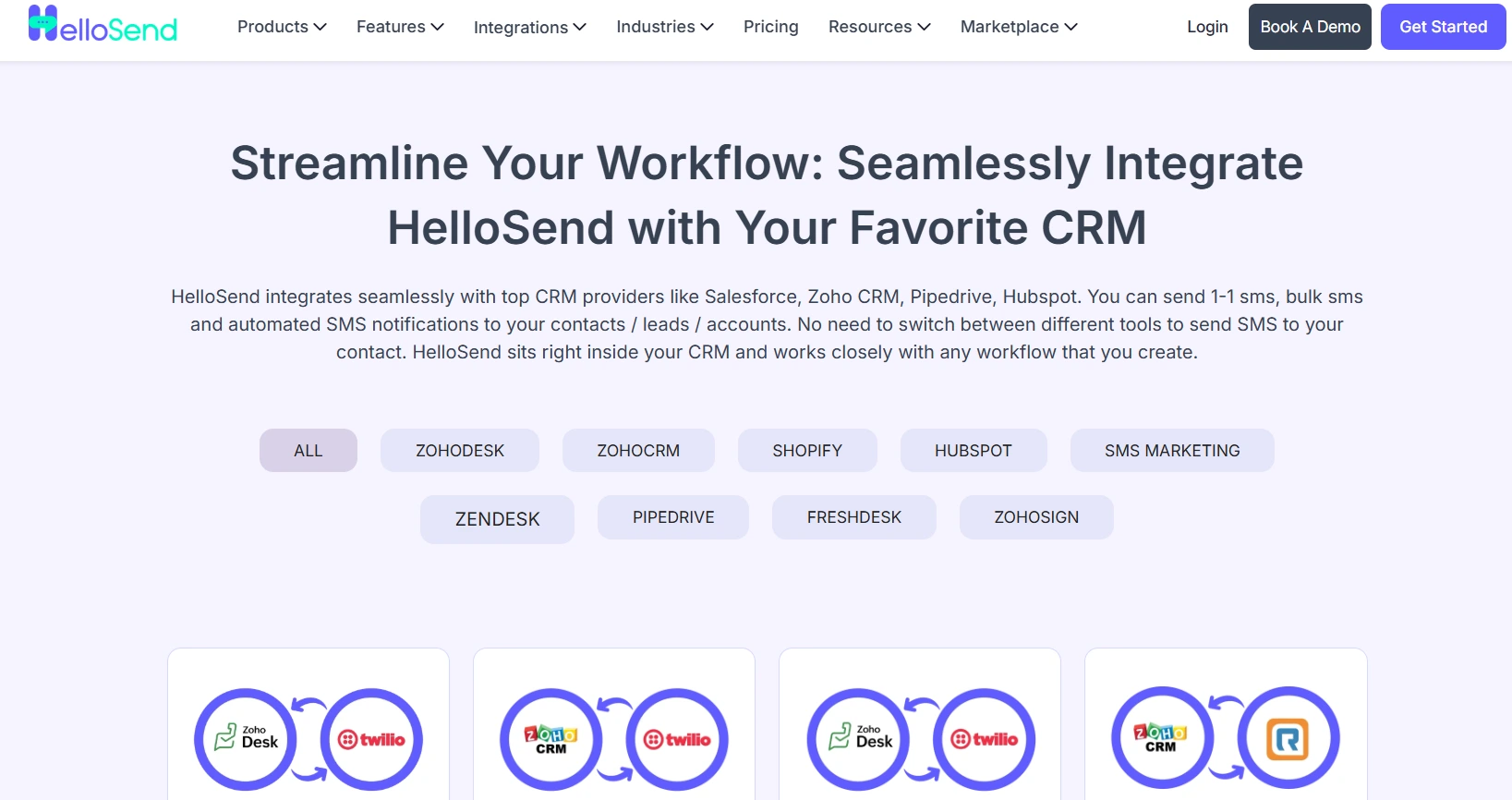
HelloSend integrates smoothly with top CRM platforms like-
- Pipedrive
- Zoho CRM
- Microsoft Teams
So you don't have to switch between different tools. It works within your existing workflows, simplifying Communication and making it more efficient.
Click on the HelloSend Integrations to learn more about it.
Pricing:
HelloSend prices by seat, not by message volume, so cost stays predictable as a front desk grows.
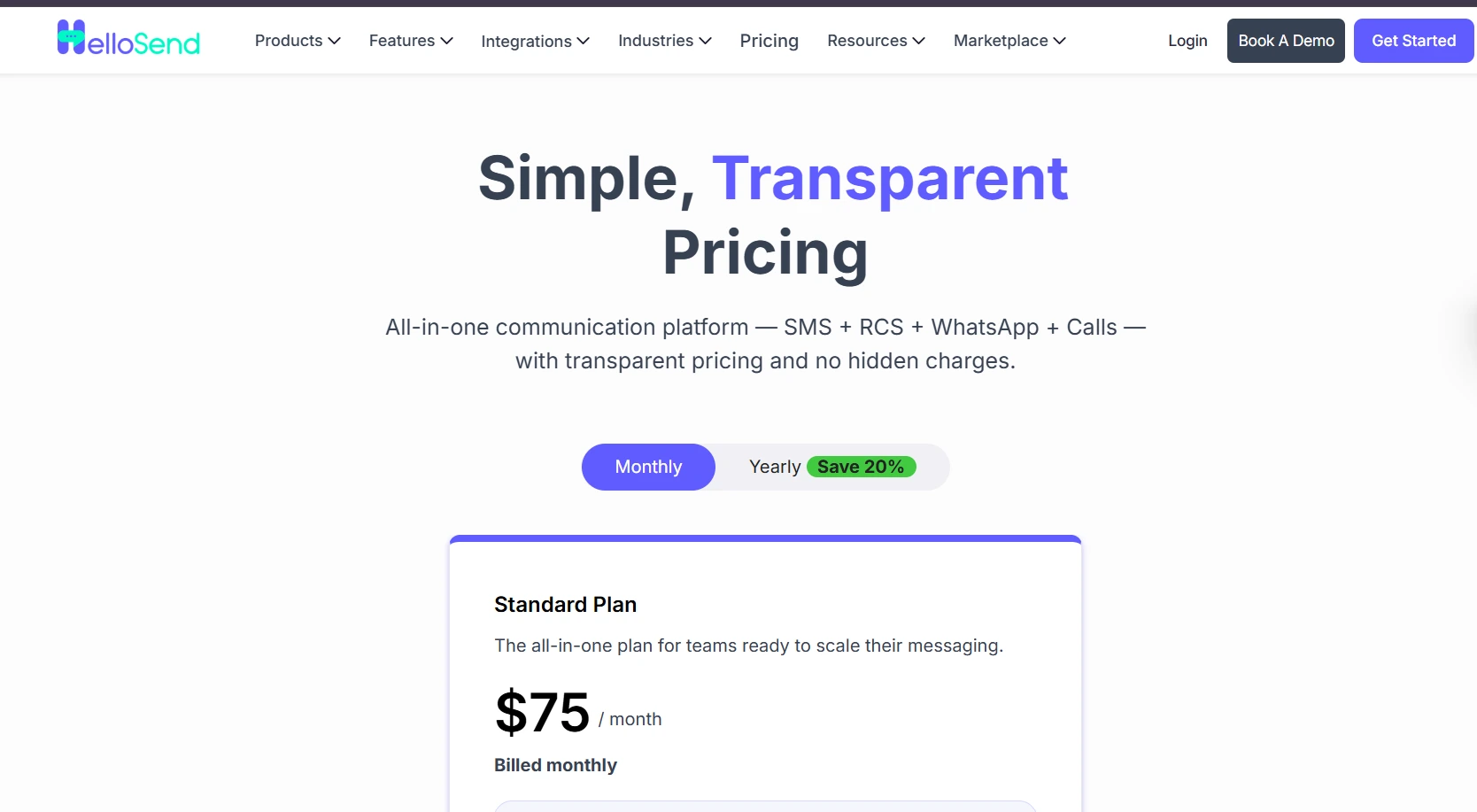
For more details, check HelloSend pricing plans.
Pros:
- Easy-to-use platform.
Cons:
- There is limited customization in the basic plan.
2. Omnisend
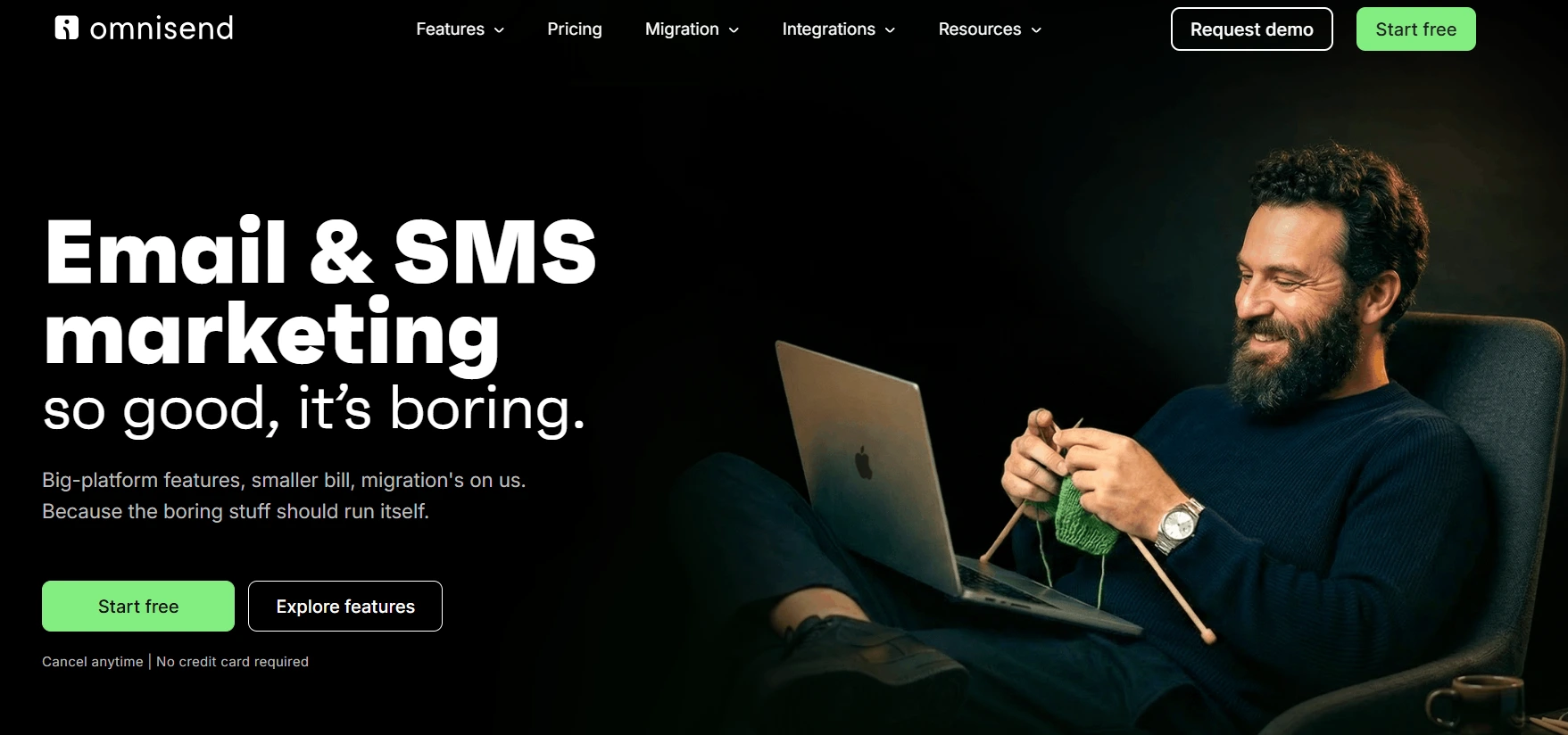
Omnisend is another powerful tool for healthcare marketers looking to automate their communication. Its robust email and SMS automation features are ideal for patient engagement.
Pricing: Starting at $16 per month.
- Pros: Easy automation setup and multi-channel support.
- Cons: Limited free tier.
3. Textla
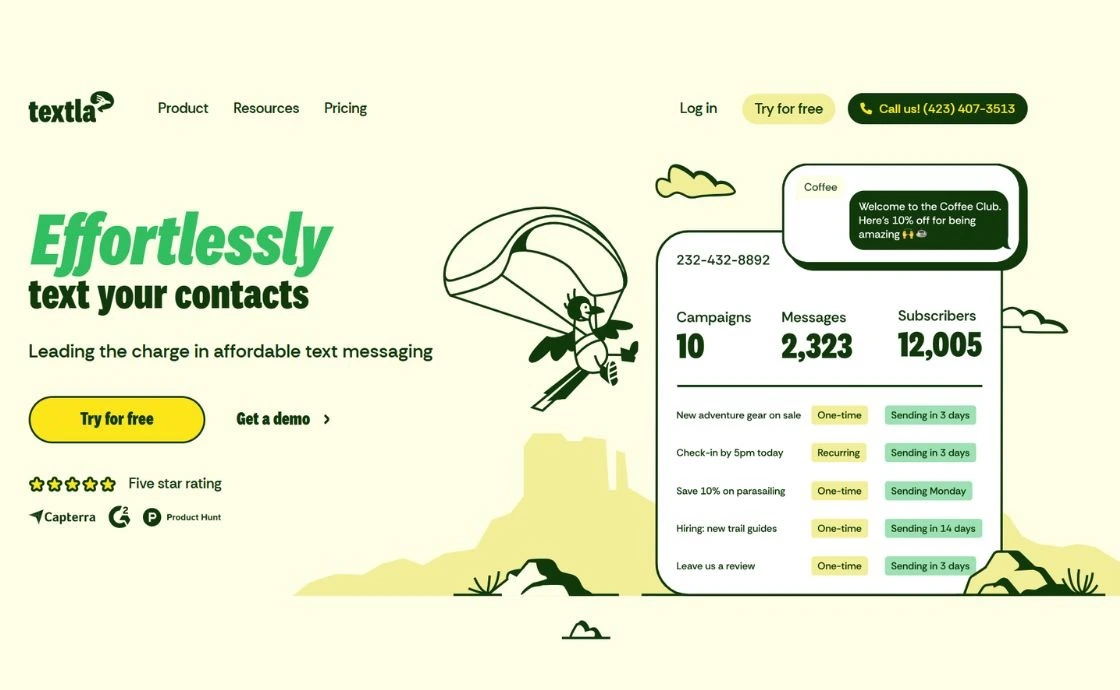
Textla helps businesses engage with customers and patients via SMS and MMS. It's ideal for appointment reminders, follow-up messages, and patient surveys.
Pricing: Starting at $19 per month.
- Pros: Simple setup, excellent customer support.
- Cons: Limited advanced features in the basic plan.
Types Of Healthcare Marketing Strategy You Can Explore
There are several types of digital marketing strategy for healthcare that healthcare organizations can adopt.
Here are some popular options:-
- Content Marketing: Educational content that builds authority.
- Paid Advertising: Ads on Google, Facebook, or Instagram.
- Referral Marketing: Encouraging existing patients to refer others.
- Influencer Marketing: Partnering with healthcare influencers.
Healthcare Marketing Strategy Example That Delivered ROI
No-shows are where most practices lose money quietly, and they are also where SMS and WhatsApp show up fastest in the numbers.
A multi-location dental group switched appointment reminders from a single automated call to a two-way SMS and WhatsApp sequence: a reminder 48 hours out, a confirm-or-reschedule prompt the day before, and a same-morning nudge. Patients replied "yes" or "reschedule" or asked a quick question instead of ignoring a voicemail.
The front desk stopped chasing no-shows by phone and started working a shorter list of real reschedules instead. Fewer empty chairs meant more booked slots filled without adding a single new marketing dollar. That is one of the effective marketing strategies in healthcare behind most SMS and WhatsApp wins: the gain rarely comes from a new campaign; it comes from a channel patients actually respond to.
How to Market Healthcare Services?
Marketing healthcare services requires a patient-first approach. Focus on delivering clear, helpful, and empathetic communication. Moreover you can use automated texting service for smooth message sending.
Ethical marketing is essential, and healthcare organizations must always comply with legal regulations such as HIPAA when using patient data.
Wrap-Up
Healthcare marketing today comes down to three things working at the same time: content patients trust, visibility where they search first, and messaging that reaches them on their preferred channel. Get any one of those wrong and the appointment goes to a competitor instead.
The tools in this guide handle the messaging piece, so your team can focus on the care. Healthcare marketing strategy today succeeds on the right mix of technology, effective messaging, and a strong focus on patient needs.
Technology isn't just a trend; it's a game-changer for building trust and fostering long-term patient relationships.
If you are still looking for a reasonable tool for your healthcare business, try HelloSend. And see the difference it can make for your practice. Contact us now!
FAQs
1) What is a healthcare marketing strategy?
A healthcare marketing strategy promotes services, attracts patients, and builds relationships using digital tools and personalized messaging.
2) How do you market health care services effectively?
Effective marketing requires understanding patient needs and using digital channels like SEO, social media, and email to engage patients.
3) What are the most effective healthcare marketing strategies?
SEO, local search optimization, content marketing, and online reviews build visibility and trust with prospective patients. SMS communication keeps existing patients engaged after they book.
4)Which tools help with healthcare communication and outreach?
Timely SMS and email updates reduce missed appointments and keep patients engaged between visits. Consistent communication also builds the trust that drives referrals and repeat visits.
5) How can hospitals attract more patients online?
A well-optimized website, an active Google Business Profile, and strong local SEO help hospitals show up when patients search nearby. Educational content builds authority and keeps them on the site longer.
6) How does SMS marketing help healthcare providers?
SMS delivers appointment reminders, follow-ups, and health updates directly to patients' phones. This improves show-up rates and keeps patients engaged after their visit.