

Summarize this blog post with:
Quick Summary
Most engagement advice tells you to send more messages. That's not the problem. The problem is that most SaaS teams engage customers the same way regardless of lifecycle stage, product usage, or account value, then wonder why response rates stay flat. This post covers six strategies, nine quick tips, and what to check before picking a tool to run any of them.
Median B2B SaaS annual churn sits at 3.5%, according to Recurly's Churn Rate Benchmarks report. Mid-market companies (the 10-to-100-employee range) beat that number when engagement is coordinated across channels. They miss it badly when it isn't.
The gap isn't a strategy. It's tooling.
A customer who churns rarely does so without warning. Usage drops, support tickets go quiet, logins slow down, then one day there's a cancellation email. The signals were there weeks earlier. Most engagement programs miss them because they treat every customer the same way at every stage, instead of adjusting based on what that customer is actually doing right now.
What Is SaaS Customer Engagement?
SaaS customer engagement is the ongoing set of interactions( in-app messages, email, SMS, WhatsApp, voice) that keep a customer active and getting value between the sale and the renewal.
Most SaaS engagement strategies underperform because they're built around sending, not around segmenting. A new trial user, a two-year customer up for renewal, and an account that just went quiet all get the same newsletter on the same schedule. None of them responds the way a targeted message would.
Three shifts fix most of this on their own: engage by lifecycle stage instead of a single campaign calendar, let product usage data decide when to reach out instead of a fixed date, and treat support interactions as engagement opportunities instead of just tickets to close.
Best SaaS Customer Engagement Strategies
1. Segment Engagement by Lifecycle Stage, Not a Single Campaign Calendar
A brand-new trial user and a three-year customer facing renewal have nothing in common except that they're both "customers." Sending them the same monthly update wastes the message on both.
- Split your base into at least three stages: onboarding, active use, renewal/risk.
- Write separate messaging for each stage instead of one template with a few swapped variables.
2. Turn Support Tickets Into Engagement Signals, Not Just Closed Cases
A support ticket is a moment where the customer is already paying attention. Closing it and moving on wastes that attention.
- Follow up two weeks after a resolved ticket to confirm the fix actually stuck.
- Flag repeat tickets from the same account as an engagement risk, not just a support metric.
3. Let Product Usage Decide When You Reach Out
A customer who hasn't logged in for ten days needs a different message than one who logs in daily but never touches your newest feature. Sending both the same "Check out what's new" email misses both problems.
- Build outreach around specific usage patterns: inactivity, partial feature adoption, and sudden drop-off.
- Skip outreach entirely for customers already engaging well. More messages isn't the goal.
4. Start Renewal Conversations Before the Contract End Date
Waiting until 30 days before renewal to start that conversation means you're negotiating from a position where the customer has already decided, one way or another.
- Open the renewal conversation at the 90-day mark with a value recap, not a pricing pitch.
- Track expansion signals (usage growth, new team members added) separately from renewal risk signals.
5. Build a Referral Loop Tied to Actual Product Milestones
Generic referral programs ask customers to refer friends. Milestone-tied programs ask engaged customers to refer friends, which is a very different request from the same person.
- Trigger the referral ask after a usage milestone (100th action, first anniversary), not a random date.
- Reward with product value (extra seats, premium features) alongside or instead of cash, since it reinforces continued use.
6. Test Engagement Messaging the Way You'd Test a Feature
Most teams A/B test their marketing emails and never touch the messages that actually retain customers.
- Test channel, timing, and framing on renewal and win-back messages specifically, not just acquisition copy.
- Run tests long enough to reach significance before declaring a winner. A one-week test on a low-volume segment tells you nothing.
Pro Tips to Get a Better SaaS Customer Experience
Here are the pro tips worth adding regardless of which strategies above you prioritize first:
- Give customer-facing teams visibility into product usage data, not just support ticket history.
- Set up an alert for accounts that stopped logging in but haven't been cancelled. Silent churn is easier to catch than an actual cancellation.
- Use short, in-app surveys instead of long email NPS forms. Response rates drop sharply once someone has to leave the product to answer.
- Send a personal note for major milestones instead of a templated congratulations email. It costs more time and gets noticed for exactly that reason.
- Localize engagement messaging by industry vertical, not just company size. A healthcare customer and a retail customer using the same feature have different reasons for using it.
How Do You Choose the Right Customer Engagement Platform?

The right customer engagement platform depends on how many of the six strategies above you're actually trying to run today, not which platform has the longest feature list.
- Segmentation depth: Can it split customers by lifecycle stage and usage pattern, not just by plan tier?
- Trigger logic: Does outreach fire from real product behavior, or only from a fixed send schedule?
- Cross-team visibility: Do support, sales, and CS see the same customer history, or does each team work from its own view?
- Multichannel reach: Can it run email, SMS, WhatsApp, and voice from one place, or does each channel need a separate tool?
- Reporting depth: Does it report on retention and reactivation impact, or just delivery and open counts?
Most teams don't need all five on day one. Start with whichever one maps to the strategy that's currently broken.
Best Tools for SaaS Customer Engagement
1. HelloSend
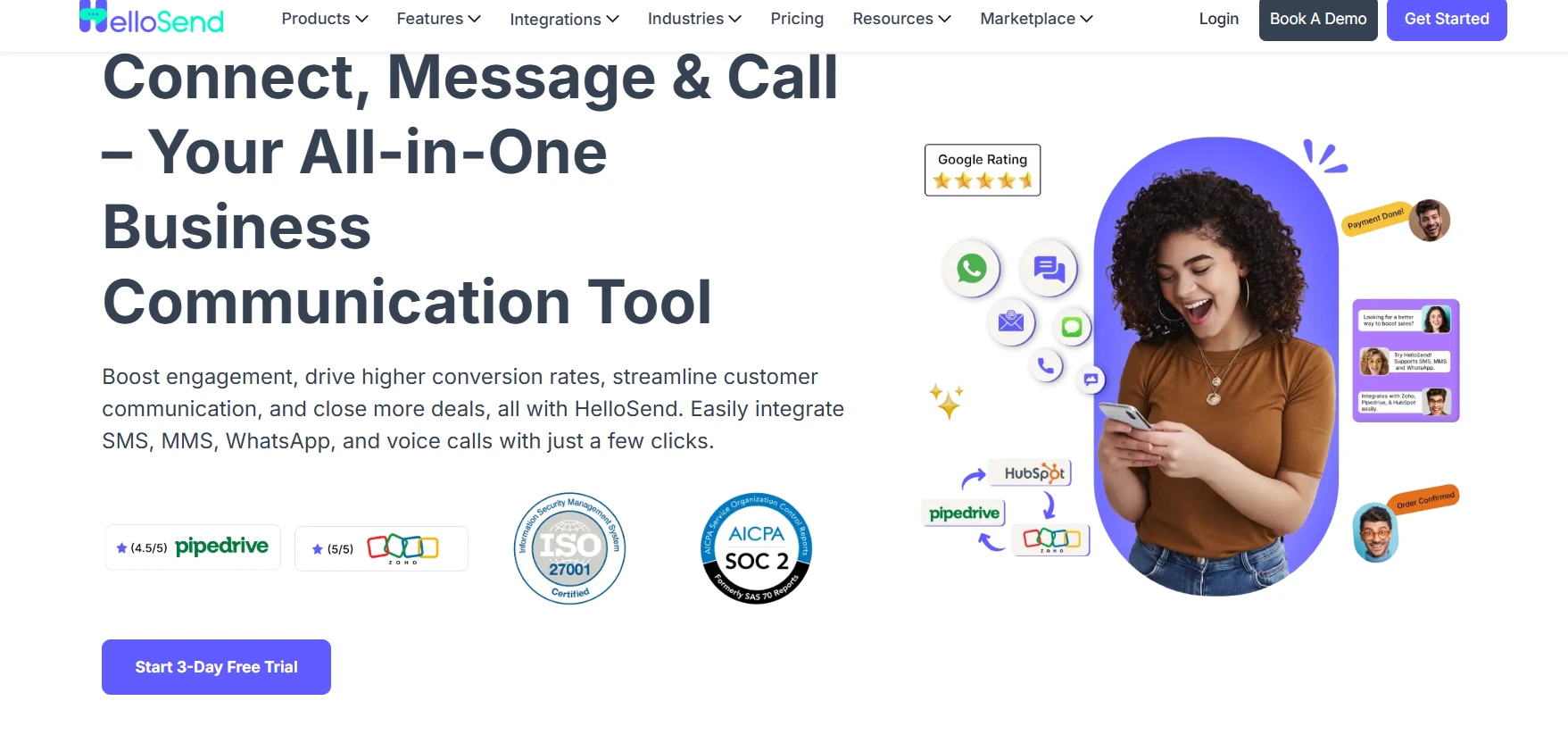
HelloSend runs SMS, WhatsApp, and voice calling from inside the CRM your team already uses instead of sitting next to it as a separate tool.
A separate SMS tool doesn't know a customer is 90 days from renewal. A separate call log doesn't know support just closed a ticket on that account. Segmentation and behavior-based triggers only work if the platform sending the message actually has that data in the first place. HelloSend pulls directly from the CRM record, so a campaign, a support reply, and a call all draw from the same context instead of guessing at it.
HelloSend isn't a CRM replacement. It's built for teams that already work with Zoho, HubSpot, Pipedrive, Salesforce, Zendesk, or Microsoft Teams who want engagement across channels without adding another disconnected tool.

2. Braze:
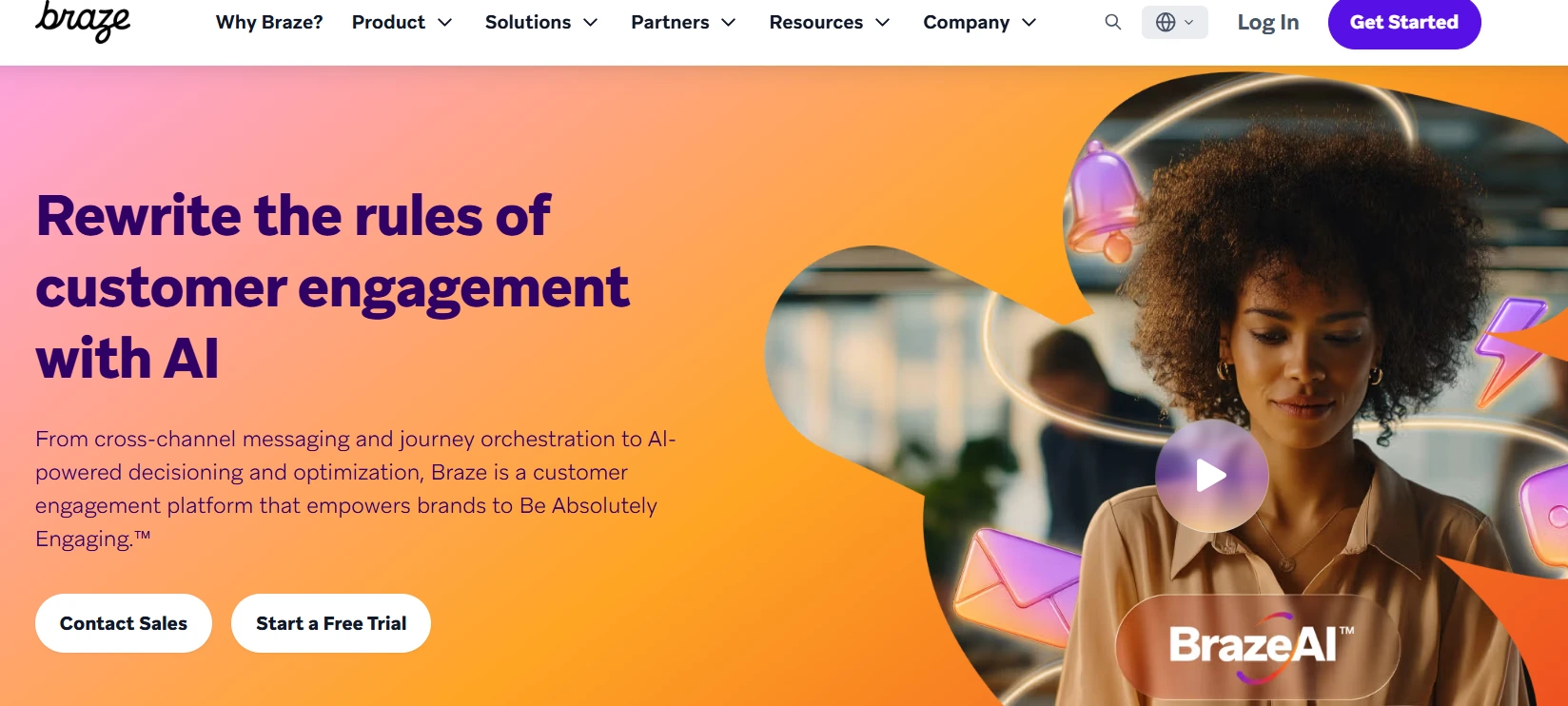
Braze runs cross-channel messaging, journey orchestration, and AI-driven personalization (BrazeAI) across email, SMS, WhatsApp, push, in-app, and even connected TV, all from one platform. It's a recognized leader in Gartner's Magic Quadrant for Multichannel Marketing Hubs, and it's built for consumer-scale personalization: brands using it to run real-time, data-driven campaigns across massive user bases.
That scale comes with a trade-off worth knowing before evaluating it. Braze is built primarily for B2C, not B2B SaaS specifically, and it's a standalone marketing and customer-data platform, not a CRM extension. Getting the most out of it typically means dedicating engineering or marketing-ops resources to configure workflows and integrations, and pricing scales on usage, monthly active users, contacts, and message volume, quoted directly by their sales team rather than published upfront.
For a 10-to-100-employee SaaS team already living inside HubSpot, Salesforce, Zoho, or Pipedrive, Braze is a genuinely strong option if the goal is building a new, standalone engagement system from scratch. It's a heavier lift than a tool meant to plug into a CRM you already run.
3. InsiderOne:
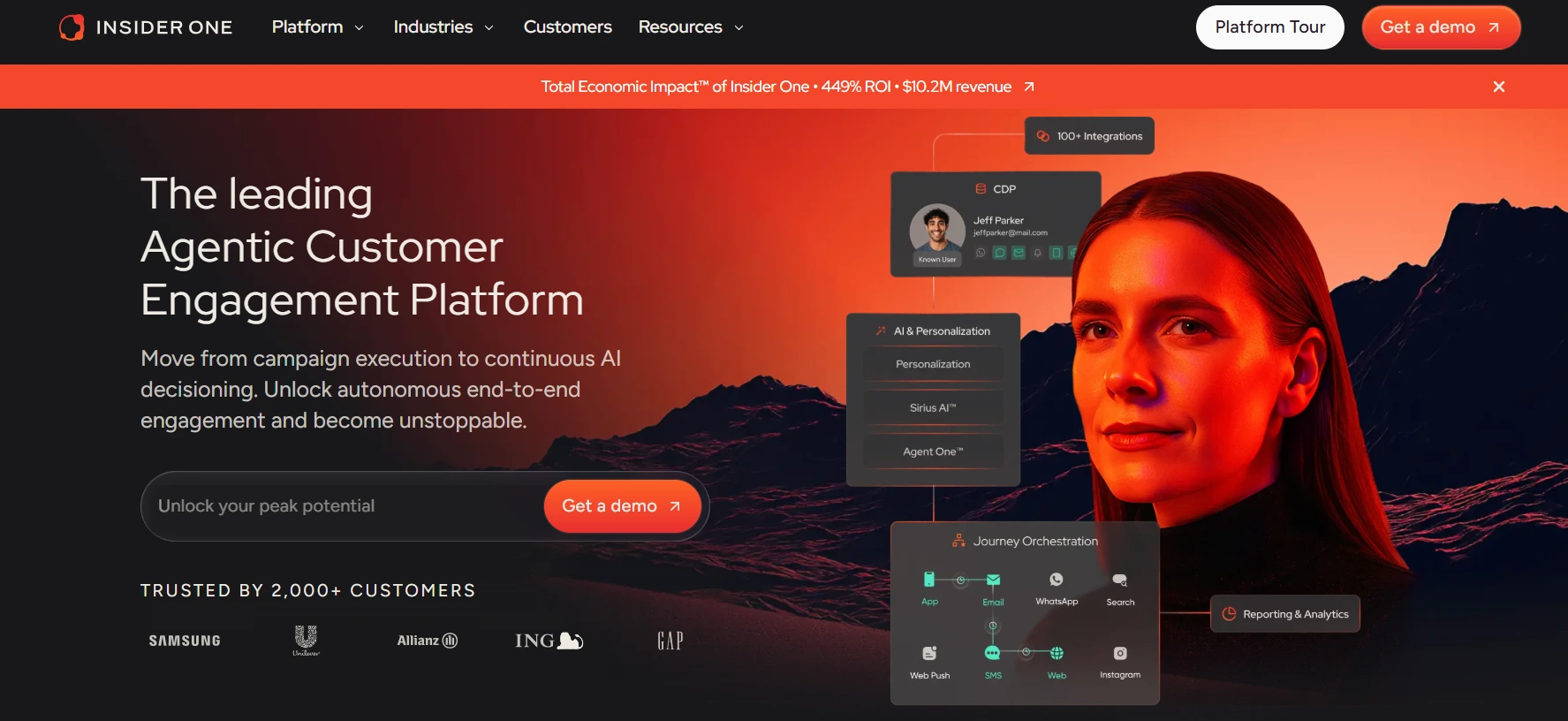
InsiderOne unifies a native customer data platform with journey orchestration and AI-driven personalization across 12+ channels, including WhatsApp, SMS, email, web, and app. It's recognized as a leader in IDC's MarketScape for AI-Enabled Marketing Platforms and a Gartner Peer Insights Customers' Choice for Multichannel Marketing Hubs, and its May 2026 acquisition of Bluecore added deeper retail data infrastructure to the platform.
That last point is a useful signal for fit. InsiderOne's customer base, brands like Samsung, L'Oréal, Sephora, and Toyota, skews toward consumer retail and enterprise scale, not B2B SaaS specifically. It's built as a standalone hub with its own CDP at the center, not an extension of a CRM you already run.
For a SaaS team weighing whether to build a new central engagement system from scratch, InsiderOne is a legitimate, well-regarded option. For a 10-to-100-employee team already running Salesforce, HubSpot, Zoho, or Pipedrive, it's solving a different problem than staying inside that CRM.
Conclusion: What's Next?
Every signal in this post was there before the cancellation email. A login that slowed down. A ticket that went quiet. A renewal conversation started 30 days too late instead of 90.
None of that gets caught by better writing. It gets caught by a system that notices.
That's the real choice underneath these 6 strategies: not which one to try first, but whether your tools can see the behavior worth acting on, and whether every team looking at that customer sees the same thing they do. Start with whichever strategy is obviously broken today. Fix the tooling gap once it's the thing actually holding you back, not before.
For onboarding, health scoring, and community-building tactics, read
Best Customer Engagement Strategies For SaaS Businesses.

FAQs
1. How can SaaS companies improve user retention through customer engagement tactics?
Trigger outreach from customer behavior, not a calendar, and catch disengagement before a cancellation request arrives. Run every channel, SMS, WhatsApp, email, and voice, from one customer record, so sales and support never contradict each other. Companies that automate these triggers instead of relying on manual check-ins see measurably lower monthly churn.
2. Why does customer engagement matter for SaaS companies?
Engagement is the difference between a customer renewing and a customer churning. Median B2B SaaS annual churn sits at 3.5%, and most of that loss traces back to disengagement weeks before cancellation, not a single bad SaaS customer experience. Companies with strong engagement also expand revenue faster, since retained customers are the ones who upgrade.
3. What are the best SaaS customer engagement strategies?
The six that matter most here: segment by lifecycle stage instead of one calendar, treat support tickets as engagement moments, let product usage decide timing, start renewal conversations at 90 days instead of 30, tie referrals to usage milestones instead of random asks, and test retention messaging the way you'd test a product feature. None of these requires a specific tool to start.
4. What are the best SaaS platforms for improving customer engagement?
The right platform depends on whether the gap is channel breadth, CRM depth, or both. CRM-native platforms like HelloSend run SMS, WhatsApp, and voice directly inside HubSpot, Salesforce, Zoho, or Pipedrive, avoiding the fragmentation that separate point solutions create. Pick based on which CRM you already run, not which platform has the most features.
5. How do you improve SaaS customer engagement?
Start by identifying where engagement actually breaks today, usually fragmented tools or manual outreach, and fix the biggest gap first instead of running all seven strategies at once. Move to CRM-native messaging before layering on automation, since disconnected channels undermine every other tactic. Most SaaS teams see the fastest improvement by unifying SMS, WhatsApp, and voice into one customer engagement platform rather than adding more point tools.

.webp)


.webp)
