

Summarize this blog post with:
Quick Summary
Explore powerful digital marketing strategies for healthcare providers. Learn how hospitals and clinics can leverage SEO, social media, and online advertising to attract patients and build a strong digital presence.
Your hospital has skilled doctors, modern infrastructure, and excellent care, yet your appointment slots sit half-empty. Meanwhile, a competitor clinic three miles away has a 3-week waiting list.
The difference? They show up online. You don't.
Patients are no longer asking friends for doctor recommendations. They are typing symptoms into Google, reading reviews, and booking appointments, all before making a single phone call. If your hospital or clinic is invisible in that journey, you are losing patients to competitors who are not necessarily better, just more visible.
This is exactly where digital healthcare marketing changes the game. And this blog is for healthcare decision-makers who already know marketing matters, and now need a clear, strategic roadmap to execute it. From core channels and advanced hospital strategies to tools and budget-friendly clinic tactics, everything you need is covered below.
Why Digital Healthcare Marketing Is No Longer Optional for Hospitals and Clinics?
The conversation has shifted. Patients are no longer passive; they research, compare, and evaluate healthcare providers the same way they shop for any other service. If your hospital or clinic is not meeting them at that moment, your competitor is.
How do patients research and Choose Healthcare Providers Online?
Before a patient ever walks through your door, they have already made up their mind about you, online. Studies show that 77% of patients use search engines before booking an appointment. They search for symptoms, read about treatments, compare specialists, and check reviews, all in one sitting.
The Rising Cost of Patient Acquisition and How Digital Reduces It
Traditional patient acquisition, such as billboards, print ads, and TV spots, is expensive and untraceable. You spend, and you hope. Digital marketing flips that model entirely. With SEO, PPC, and content marketing, every rupee or dollar spent is trackable, and campaigns can be optimized in real time based on what is actually working.
Healthcare Digital Marketing: The Core Channels That Drive Patient Growth
A strong healthcare digital marketing strategy is not built on a single channel; it is built on several channels working together. Here are the core ones every hospital and clinic should have running.
- Search Engine Optimization (SEO): SEO is the foundation. When a patient types "pediatric clinic near me" or "best cardiologist in [city]," your website either appears or it does not. There is no middle ground. For healthcare SEO, the focus must align with Google's E-E-A-T framework: Experience, Expertise, Authoritativeness, and Trustworthiness.
- Pay-Per-Click (PPC) Advertising: SEO takes time. PPC delivers results immediately. When someone searches "same-day appointment dermatologist" or "urgent care near me," a well-placed Google Ad puts your clinic at the top of the results instantly. The key to healthcare PPC is intent-based targeting. You are not trying to reach everyone; you are trying to reach the person who needs an appointment right now.
- Content Marketing: Patients trust doctors who educate them. A hospital blog that answers real questions, "What are the early signs of kidney disease?" or "When should I see a neurologist?", builds the kind of trust that converts a first-time reader into a loyal patient. Beyond blog posts, treatment guides, and patient FAQs, reduce front-desk calls and increase time on site. This trick will Boost Customer Retention.
- Social Media Marketing: Social media is where your hospital's personality lives. Facebook works best for patient communities, health tips, and community campaigns. Instagram is ideal for visual content, behind-the-scenes glimpses, doctor features, and awareness posts. LinkedIn is powerful for specialist referrals and B2B healthcare partnerships.
Advanced Strategies That Build Authority And Trust
Once the core channels are active, hospitals need advanced strategies to differentiate themselves from every other provider in the market.

Strategy 1: E-E-A-T Content Marketing
Most healthcare blogs read like promotional brochures, surface-level, and medically vague, which is exactly why patients do not trust them, and Google does not rank them. Healthcare businesses that publish medically accurate, helpful content aligned with E-E-A-T best practices - Experience, Expertise, Authoritativeness, and Trustworthiness establish credibility, boost engagement, and build lasting patient loyalty.
In a space where patients are making decisions about their own bodies, clinically authoritative content is not just a marketing asset it is the foundation of digital trust.
- Add author bios with clinical credentials and medical titles on every content piece
- Have every blog post, treatment guide, and FAQ reviewed by a licensed medical professional
- Answer real patient questions using medically accurate, jargon-free language
- Cite credible medical sources, journals, government health portals, and clinical studies
Strategy 2: Online Reputation Management
A strong Google Business Profile makes people 2.7 times more likely to trust your practice and more likely to visit, which means reputation management is a direct patient acquisition strategy, not just a trust exercise.
Hospitals and clinics with hundreds of genuine, actively managed reviews consistently outperform competitors with better facilities but neglected online profiles. Patients equate silence in response with institutional indifference, and they choose accordingly.
- Automate post-visit review requests via SMS or WhatsApp within 24 hours of every appointment
- Respond to every review, positive and negative, within 48 hours, professionally and empathetically
- Display rotating patient testimonials prominently on your homepage and service landing pages
- Use patient video testimonials as social proof content across social media and email campaigns

Strategy 3: Local SEO Domination
Google searches focus on local information, and if your hospital does not have a local SEO strategy, you are invisible to nearly half of the patients actively looking for providers in your area right now.
Local SEO goes far beyond a Google Business Profile; it requires geo-targeted landing pages for every specialty and every location you serve. When a patient searches "orthopedic hospital in Raipur" or "pediatric clinic near me," your hospital needs to appear before every competitor at that moment.
- Build dedicated landing pages for each specialty and location combination you serve
- Maintain consistent NAP (Name, Address, Phone) across Healthgrades, RateMDs, Practo, and Zocdoc
- Optimize content for voice search queries like "find a cardiologist near me open now."
- Treat each hospital location as its own individual local SEO campaign with unique content
Strategy 4: Telehealth Marketing
Telehealth is no longer a service differentiator; it is a permanent patient expectation that hospitals failing to market it are quietly losing patients. Hospitals that promote online consultations, inform patients about remote monitoring, and showcase the ease and safety of virtual healthcare are capturing high-value patient segments who would otherwise never have considered them.
Working professionals, rural patients, and younger demographics actively seek out providers who offer the convenience of virtual care, and your digital presence needs to reflect that. It also improves Customer Relations.
- Create dedicated SEO-optimized pages for each telehealth service you offer
- Run PPC campaigns targeting telehealth-specific queries separately from in-person service ads
- Use short-form video to show patients exactly how a virtual appointment works removing friction before the first booking
- Promote telehealth through Instagram Reels, YouTube Shorts, and WhatsApp campaigns targeting digital-native patient segments
Strategy 5: Authority Backlinking & Medical PR
Most hospitals focus entirely on on-page content and completely ignore the single factor that signals domain-level trust to Google, which links to you. Backlinking from credible medical sources, such as journals and health news sites, not only optimizes your SEO but also solidifies your clinical credibility, and partnering with authoritative healthcare organizations expands both your professional network and your search authority.
A single backlink from a government health portal or recognized medical journal carries more ranking weight than dozens of links from generic directories.
- Publish research findings, clinical insights, and expert commentary that medical publications want to cite
- Pitch your specialist doctors as expert sources to health journalists and national media outlets
- Partner with local medical associations, health NGOs, and government health portals for co-published content
- Get listed on authoritative healthcare directories with backlinks pointing directly to your service pages
Strategy 6: HIPAA-Compliant Omnichannel Patient Communication
When a hospital sends a personalized follow-up after an appointment, responds instantly on WhatsApp, or delivers a timely medication reminder, that is not just good service, it is trust-building marketing that brings patients back and drives referrals.
Consistent messaging across all patient platforms, social media, hospital websites, email, SMS, and in-person visits creates a seamless experience that reinforces the hospital's commitment to patient-centered care at every single touchpoint. But this only works within a HIPAA-compliant framework, where every data-capturing tool and communication channel has been audited to protect patient privacy.
- Integrate SMS, WhatsApp, and voice follow-ups into one unified CRM-connected patient communication workflow
- Set automated post-visit messages triggered by CRM actions, appointment completed, prescription issued, and discharge recorded
- Audit all digital tracking tools and ad pixels for HIPAA compliance before launching any patient-data campaign.
Best 3 Tools for Digital Healthcare Marketing
Tool 1 - HelloSend | Omnichannel Patient Communication
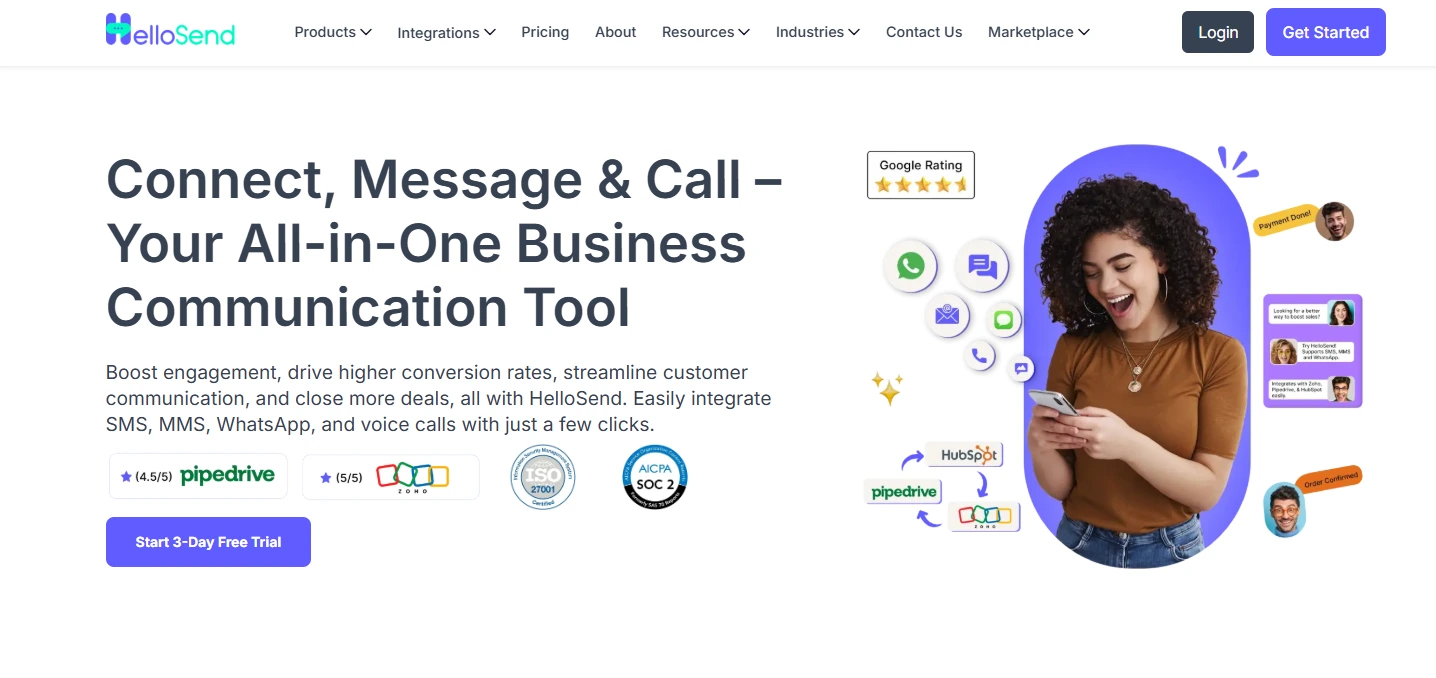
Most hospitals invest heavily in attracting new patients by running ads, building websites, and posting on social media. But here is the part most get wrong: patient communication after that first touchpoint is where appointments are lost, no-shows pile up, and trust quietly erodes.
That is exactly the gap HelloSend is built to close.
HelloSend is the best Digital Healthcare Marketing platform that brings together SMS, WhatsApp, and voice calls in a single, unified system, letting hospital and clinic teams connect with patients instantly, personally, and consistently, without juggling multiple tool.

Tool 2 - Semrush | Local SEO Amplification
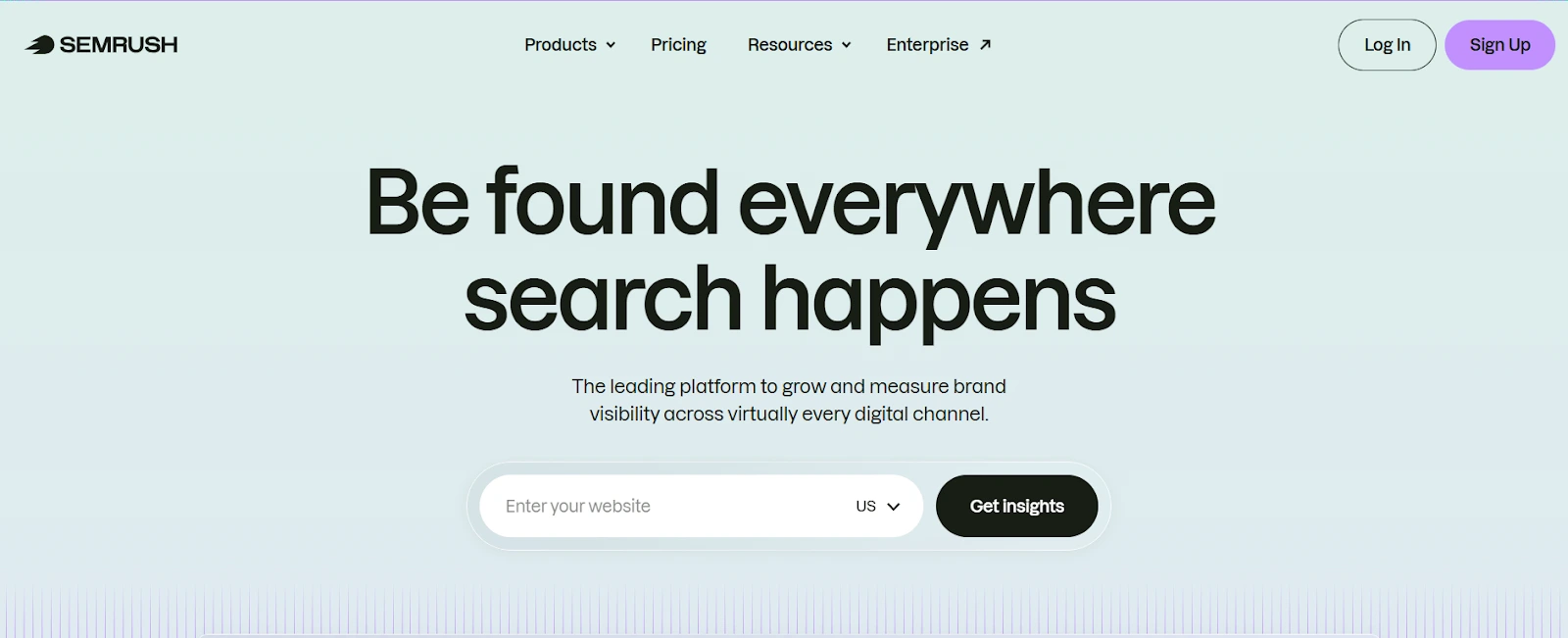
A comprehensive SEO and marketing intelligence platform designed to help healthcare providers improve their search visibility and outrank competitors.
Key features for hospitals & clinics:
- Keyword research across 21.1 billion keywords for patient search targeting
- Competitor analysis to identify which rival providers are gaining search traffic
- Site audit tool that flags technical SEO issues hurting your rankings
- Google Business Profile management for local search optimization
- PPC keyword analysis for healthcare ad campaigns
Tool 3 - Doctify | Reputation & Patient Reviews
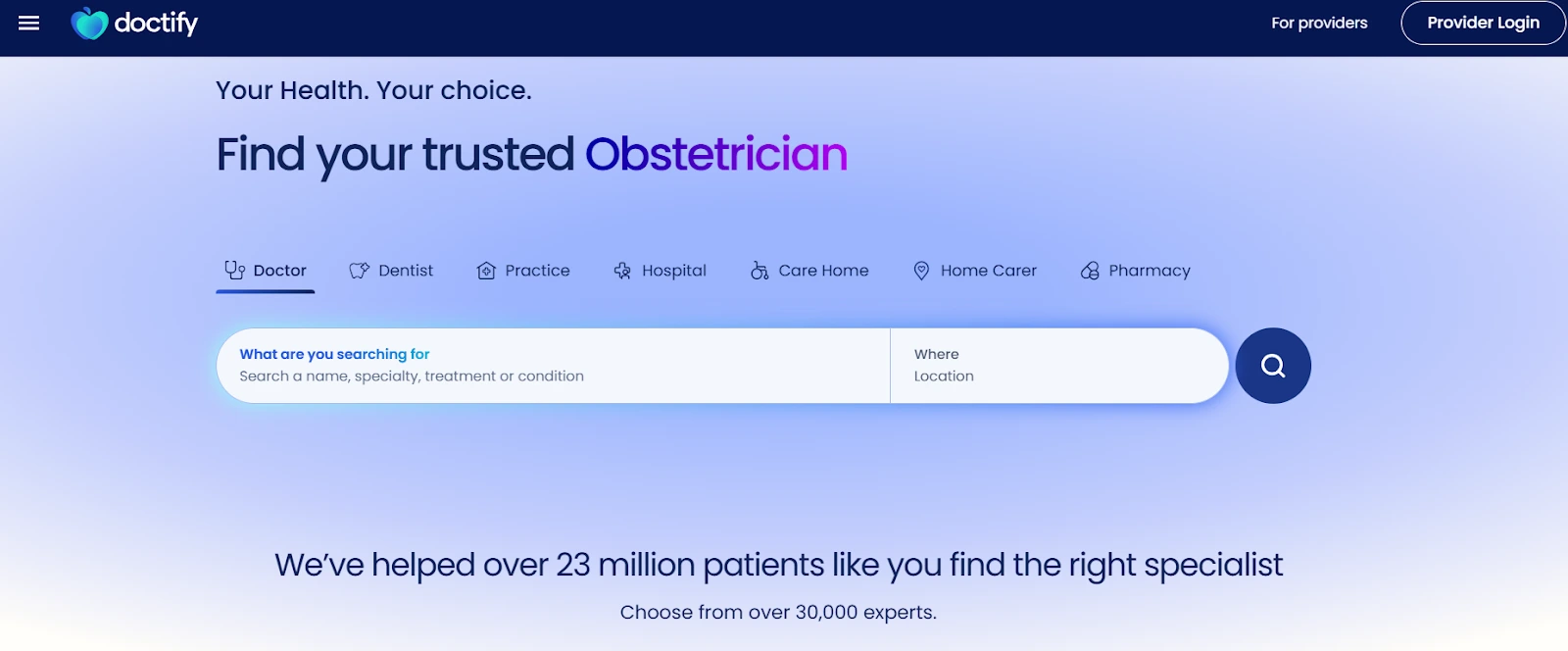
A verified patient review and reputation management platform built specifically for healthcare providers.
Key features for hospitals & clinics:
- Automated post-visit review requests sent directly to patients
- Verified reviews with fraud detection, 100% authentic patient feedback
- Criteria-based ratings (cleanliness, waiting time, doctor quality, separately scored)
- Real-time dashboard to monitor and respond to reviews
- Live calendar booking integration directly from the Doctify profile
Digital Marketing Ideas For Small Healthcare Clinics
Big hospitals have big budgets. Small clinics have something more powerful, community trust. The right digital marketing ideas for small healthcare clinics do not require enterprise spending. They require smart prioritization.
Why Small Clinics Need a Different Approach Than Large Hospitals?
A large hospital markets 20 specialties across multiple cities. A small clinic markets one or two services to one neighborhood. That specificity is not a weakness; it is a competitive advantage. Hyperlocal, community-first marketing consistently outperforms broad campaigns for small clinics because it speaks directly to a defined audience.
Low-Budget, High-Impact Tactics That Work
- Google Business Profile: Free to set up, extremely powerful for local discovery. A fully optimized GBP with photos, updated hours, services listed, and active review responses can drive consistent walk-ins and appointment calls without spending a single rupee on ads.
- Hyperlocal SEO: Target neighborhood-specific keywords, "general physician in Shankar Nagar" or "dental clinic in Civil Lines", to rank for searches that large hospitals rarely compete for.
- Short-form video on Instagram Reels and YouTube Shorts: A 30-second clip of a doctor answering a common patient question costs nothing to produce and can reach thousands of potential patients organically.
- WhatsApp and SMS reminders: Send appointment confirmations, follow-up care tips, and health reminders directly to patients' phones. Personal, direct, and extraordinarily effective for retention.
- Patient referral programs via email: A simple email asking satisfied patients to refer a friend, with a small incentive like a free health check or discount on next visit, can generate a consistent stream of new appointments at zero ad spend.
Conclusion
Hospitals and clinics that win in the digital era are not the ones with the biggest budgets; they are the ones with the most consistent, strategic, and patient-first approach to marketing. From SEO and PPC to reputation management and telehealth promotion, every channel covered in this blog is a lever that directly impacts patient acquisition and trust.
A multi-channel digital healthcare marketing strategy is no longer a competitive advantage; it is the baseline expectation. The hospitals and clinics that integrate these strategies today will be the ones patients search for, trust, and choose tomorrow.
As AI-powered search, voice assistants, and telehealth continue reshaping how patients find care, the gap between digitally active providers and passive ones will only widen. The best time to act was yesterday. The next best time is now.
To make your Digital Healthcare Marketing more efficient, try HelloSend. Contact us now!

FAQs
1. What is digital healthcare marketing, and why does it matter for hospitals and clinics?
It refers to using digital channels, SEO, social media, email, PPC, and content to attract, engage, and retain patients. It matters because the majority of patient decisions now begin online, making digital presence a direct driver of appointments and revenue.
2. How much should a hospital or clinic budget for digital marketing?
Most healthcare providers allocate 5–15% of their annual revenue to marketing, with a growing share directed toward digital channels. Small clinics can start effectively with as little as ₹15,000–₹30,000/month using a Local SEO and content-first approach.
3. Which digital marketing channel gives the fastest results for healthcare providers?
PPC advertising delivers the fastest visibility, your clinic can appear at the top of Google within hours of launching a campaign. For sustainable, long-term results, SEO and content marketing are unmatched.
4. How can small clinics compete with large hospitals in digital marketing?
By going hyperlocal. Large hospitals cannot compete for every neighborhood-specific keyword or build personal community relationships at scale. Small clinics that dominate local SEO and invest in genuine patient relationships consistently outperform larger competitors in their immediate area.
5. Is it safe to run social media ads for healthcare services under HIPAA?
Yes, with the right guardrails. Avoid retargeting pixels that store health-related identifiers, do not use patient data for ad targeting, and ensure your ad copy does not make claims that imply diagnosis or guaranteed outcomes. Always consult a HIPAA compliance officer before launching paid campaigns.


.webp)


.webp)
