
Summarize this blog post with:
Quick Summary
This blog explains what the omnichannel customer experience is, why it matters, key examples, best practices, and how the right tools help businesses create connected, personalized customer journeys.
Today’s customers don’t think in channels. They browse your website, send a WhatsApp message, respond to an SMS, and reach out to support, expecting the experience to stay smooth from start to finish. To them, it’s one conversation with your brand. But for many businesses, it’s still a disconnected journey spread across separate tools, teams, and touchpoints.
That disconnect creates friction fast. Customers have to repeat themselves, wait longer for replies, and deal with inconsistent service across channels. The result is frustration for them and lost opportunities for you. A poor experience does not just hurt satisfaction. It can affect customer engagement, retention, and long-term loyalty.
That’s why omnichannel customer experience matters more than ever. In this blog, we’ll explain what it is, why it’s important, share practical examples, cover omnichannel customer experience best practices, and look at the best tools to help businesses deliver a better-connected customer journey.
What Is Omnichannel Customer Experience?
At its core, omnichannel customer experience is the practice of delivering a seamless, consistent, and connected experience to customers across every channel, platform, and touchpoint, whether that's a website, mobile app, SMS, WhatsApp, voice call, email, or in-store interaction.
In fact, a survey of over five thousand consumers revealed that 50% consider being able to receive service anytime through their preferred channel as the most important aspect of a personalized experience.
Being present on many channels isn't enough. What makes an experience truly omnichannel is that customer data, conversation history, and context travel with the customer from one channel to the next, so they never have to start over.
Omnichannel vs. Multichannel: What's the Difference?
Omnichannel vs. Multichannel : These two terms are often used interchangeably, but they mean very different things:
- Multichannel means a business is available across multiple platforms website, email, social media, and phone. But each channel operates in its own silo. There's no shared data, no shared context.
- Omnichannel means those channels are integrated. A customer who chats via WhatsApp on Monday and calls in on Wednesday is recognized. Their history is there. The agent doesn't ask them to explain themselves again. That’s why Omnichannel customer engagement is different from multichannel.
The difference isn't in the number of channels, it's in how those channels talk to each other.
How Omnichannel Affects Sales, Support, and Engagement?
- Sales teams can follow up via the right channel at the right time, using CRM-synced data to personalize outreach.
- Support teams can resolve issues faster because they have the full conversation history regardless of which channel the customer used.
- Marketing teams can send timely, behavior-triggered messages across SMS, WhatsApp, and email without manual effort. This is the power of Omnichannel marketing.

Why Omnichannel Customer Experience Is Important?
The shift toward omnichannel isn't driven by trends; it's driven by data. Customers who experience friction across channels disengage. Those who experience continuity come back, spend more, and refer others.
Here's why it matters in practice:
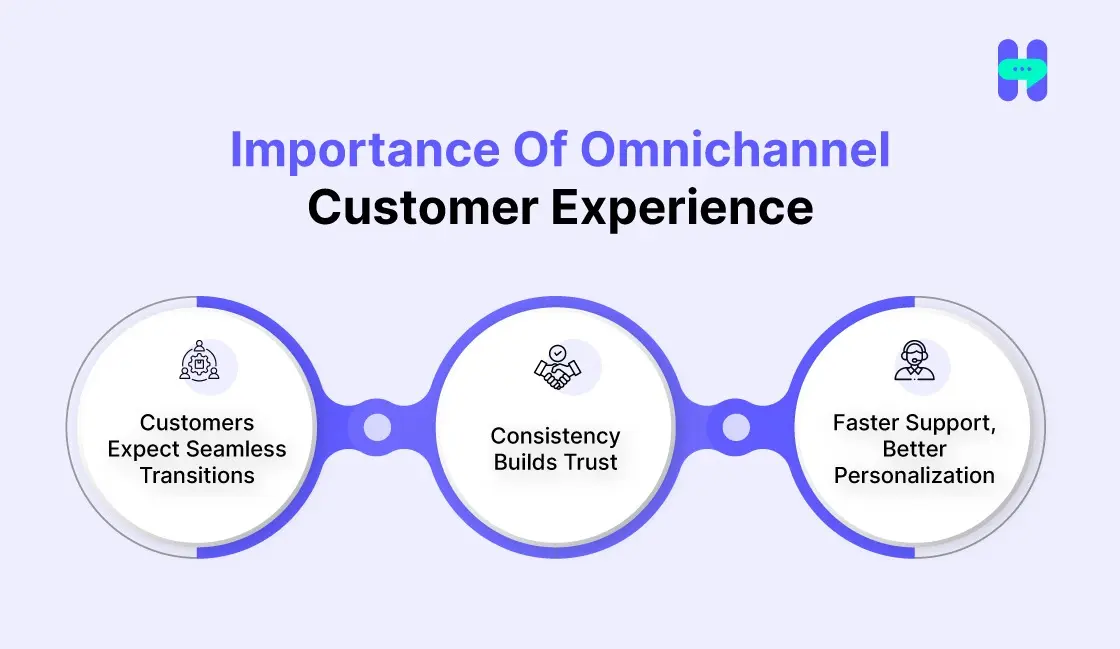
1) Customers Expect Seamless Transitions
Modern buyers don't think in channels. They start on your website, move to Instagram DMs, and expect your support agent to have full context. When that context is missing, the experience feels broken even if every individual channel is well-managed. That’s why many businesses prefer to use the power of an omnichannel platform.
2) Consistency Builds Trust
When the tone, information, and service quality are consistent across every touchpoint, customers trust your brand more. Inconsistency in different answers via SMS vs. phone, or a discount mentioned in an email that a store rep doesn't know about damages credibility fast.
3) Faster Support, Better Personalization
When agents have access to a unified customer history, they resolve issues faster. When marketers have behavioral data from across channels, they personalize outreach more effectively. Both outcomes directly impact satisfaction and revenue.
Omnichannel Customer Experience Examples
The best way to understand omnichannel customer experience is to see it in action. Here are four examples: two from globally recognized brands and two that reflect everyday business scenarios, demonstrating what connected experiences look like in practice.
1) Starbucks: Loyalty That Lives Across Channels
- Starbucks is one of the most cited omnichannel success stories for good reason. Their Rewards loyalty program connects the mobile app, in-store purchases, drive-through, and web ordering into one unified experience.
- A customer can reload their card online, order ahead on the app, earn points at a physical register, and receive personalized offers via push notification or email, all without any friction.
2) Sephora: Personalized Beauty Across Every Touchpoint
- Sephora's Beauty Insider program connects online browsing, in-store purchases, the mobile app, and email into one seamless customer journey.
- A customer who adds a product to their wishlist online will see it referenced when they visit a store. In-store purchases are logged and used to trigger personalized email recommendations.
3) A Lead Fills Out a Form: Gets an Instant Follow-Up
- Here's a scenario any business can replicate. A prospective customer fills out an inquiry form on your website at 6 PM on a Friday. By 6:01 PM, they receive a personalized WhatsApp message or SMS acknowledging their inquiry and sharing a relevant resource.
- On Monday morning, a CRM-synced follow-up reminder prompts your sales rep to call. The customer feels attended to even though the response was partially automated. That's omnichannel customer engagement at the operational level.

Best Omnichannel Tools to Improve Customer Experience
With the right tool, omnichannel customer experience moves from strategy to reality. Here are the top platforms worth considering, each with its own strengths.
Let’s find out!
1. HelloSend
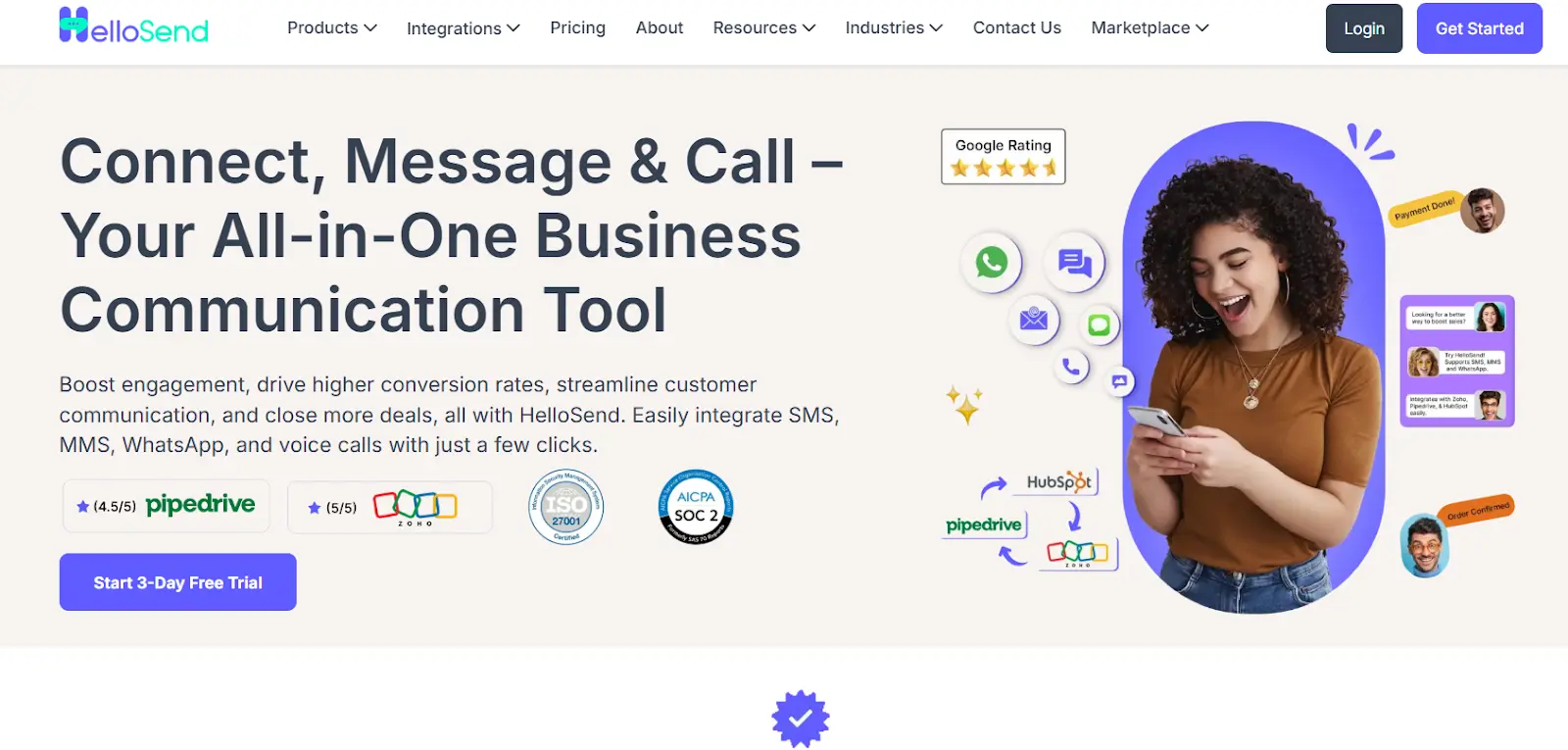
Best for: Businesses that want a messaging-first omnichannel platform to improve customer experience across SMS, WhatsApp, and voice calls, all from inside their CRM.
HelloSend is built for businesses that understand one fundamental truth: communication is the foundation of customer experience. If your messages are not reaching customers on the right channel, at the right time, with the right context, everything else falls apart.
What makes HelloSend different is not just the channels it supports, but also how deeply it integrates those channels into the workflows your team already uses.
HelloSend connects natively with HubSpot, Salesforce, Zoho CRM, and more, meaning your sales reps, support agents, and marketers never have to leave their CRM to communicate with customers. Explore more about HelloSend Integrations.
Here's what HelloSend brings to the table:
Key Features Of HelloSend
For teams in e-commerce, real estate, and Information Technology (IT), HelloSend is the fastest path from fragmented communication to a genuinely connected customer experience.
2. Intercom
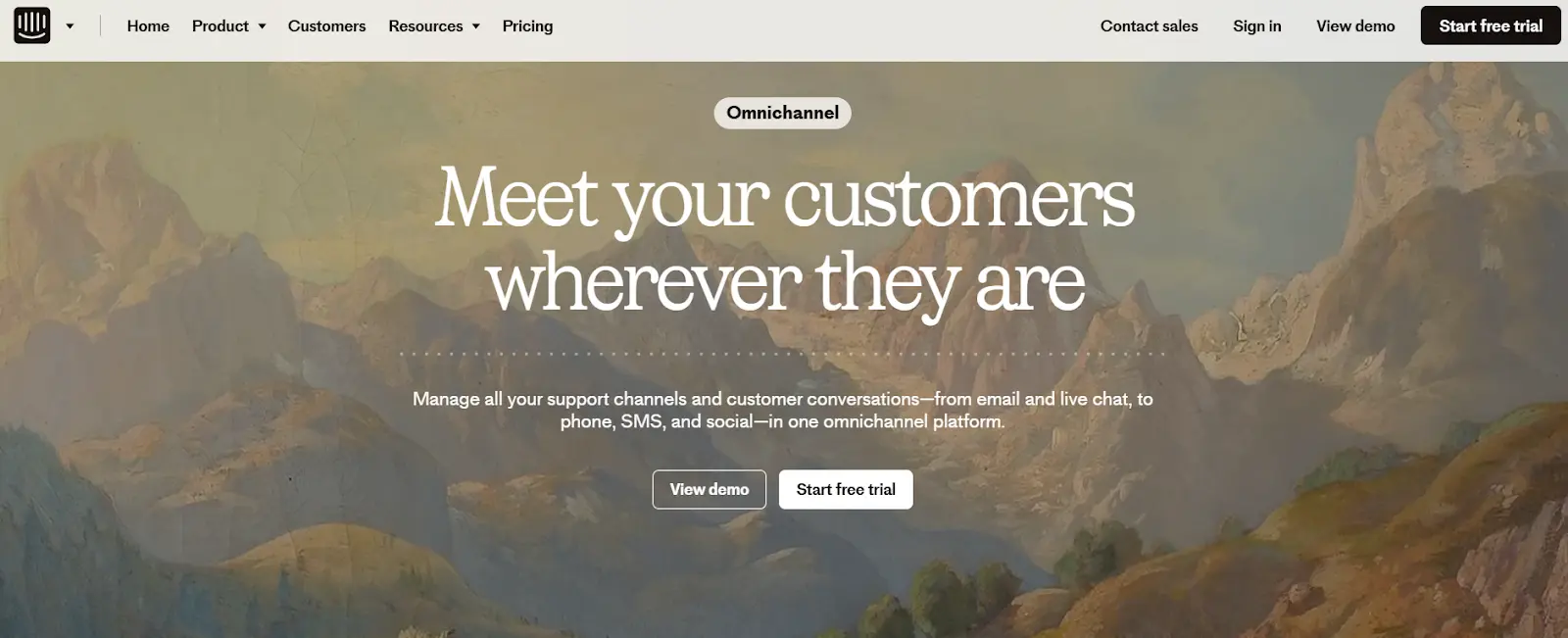
Best for: Support teams that want to manage multiple service channels within a single omnichannel helpdesk.
Intercom is a customer service platform that brings together email, live chat, phone, SMS, and social messaging into one support workspace. It's designed with support teams in mind, helping agents manage conversations, resolve tickets, and reduce response times across channels.
- Intercom's inbox consolidates inbound messages from multiple sources, giving support reps a shared view of customer interactions.
- It includes automation features for routing, tagging, and responding to common queries, along with a knowledge base and self-service tools for customers who prefer to find answers on their own.
3. Kustomer
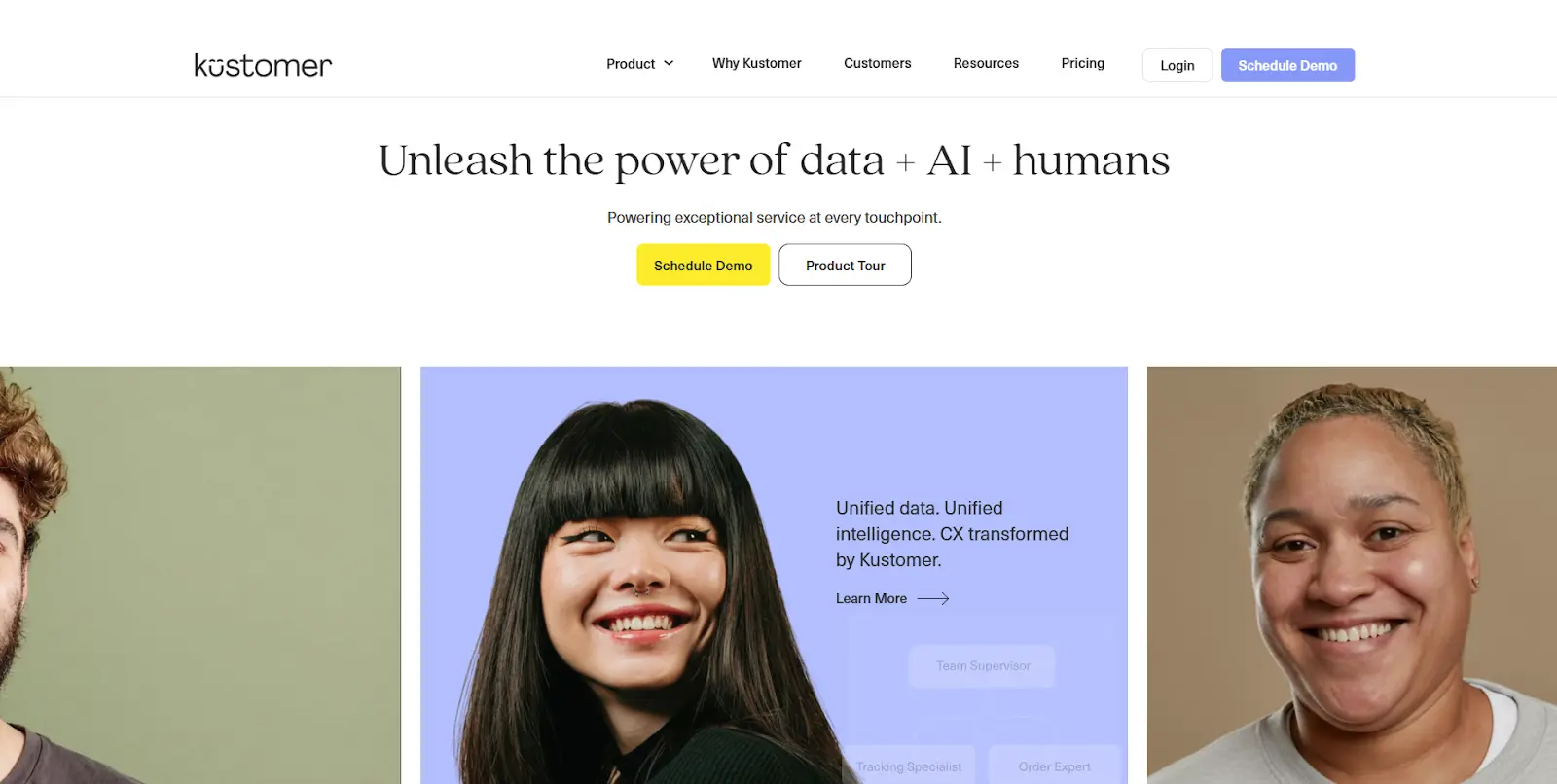
Best for: Customer service teams that want omnichannel support with CRM context and automation.
Kustomer is an omnichannel customer service CRM that combines support ticketing, customer data, and AI-powered automation in one platform. It's designed to give support agents a complete view of the customer's purchase history, past interactions, and behavior data, all in one timeline.
- Kustomer covers a range of channels, including email, chat, social, and messaging apps, with workflow automation to help teams handle high volumes of inquiries efficiently.
- Its CRM-native approach means agents have more context than a typical help desk provides, leading to more informed and empathetic customer interactions.
Omnichannel Customer Experience Best Practices
Delivering a great omnichannel customer experience doesn't happen by accident. It requires intentional strategy, disciplined execution, and the right technology. Here are the practices that separate businesses that talk about omnichannel from those that actually deliver it:
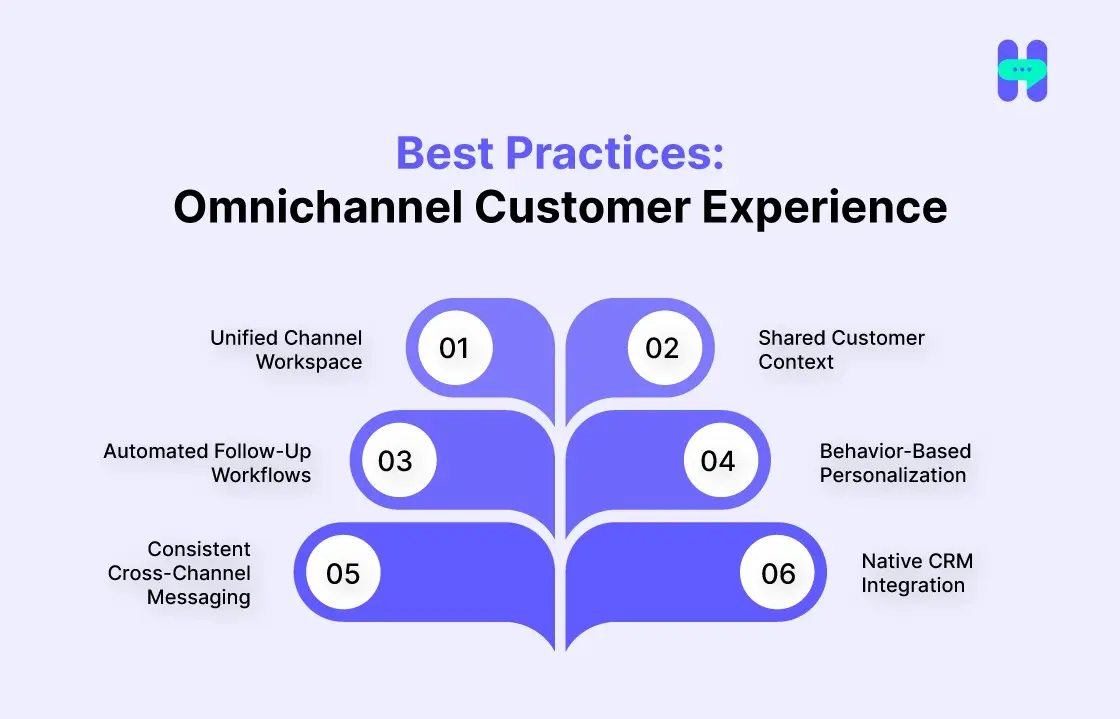
1. Unified Channel Workspace
Stop managing SMS, WhatsApp, voice, and email in separate tools. Consolidate your communication into a single platform where every agent and rep has full visibility. This alone eliminates most context-switching and handoff errors.
2. Shared Customer Context
Every person who interacts with a customer, sales, support, or marketing should be able to see the full interaction history in real time. This requires CRM integration at the core of your communication stack.
3. Automated Follow-Up Workflows
Don't rely on manual effort for follow-ups, appointment reminders, order updates, or re-engagement sequences. Set up behavior-triggered automations that go out at the right moment without requiring team intervention.
4. Behavior-Based Personalization
Use the data you have. A new lead deserves a different message than a long-term customer. Someone who abandoned a cart is in a different mindset than someone who just made a purchase. Segment your audience and tailor your communication accordingly. This will surely improve customer relations.
5. Consistent Cross-Channel Messaging
Your tone, your offers, and your information should be consistent whether a customer is reading your email, chatting on WhatsApp, or speaking with an agent. Inconsistency is one of the fastest ways to erode customer trust.
6. Native CRM Integration
Your communication platform should be natively integrated with your CRM, not loosely connected via a third-party connector that regularly breaks. Native integration ensures data flows in real time, in both directions.
Final Words!
Omnichannel customer experience is about creating one connected journey across every customer touchpoint. It means customers can move from one channel to another without losing context, repeating themselves, or facing unnecessary friction.
Moreover, the omnichannel messaging platform matters because modern customers expect smooth, consistent interactions. And businesses that deliver them gain better engagement, faster support, stronger loyalty, and more efficient internal workflows.
The key is remembering this: success doesn’t come from being present on more channels. It comes from connecting those channels in a way that feels seamless to the customer.
For brands looking to improve the customer experience through unified communication, HelloSend: best Omnichannel solution, is a strong fit. It brings together the channels that matter, keeps conversations connected, and helps teams deliver a more consistent experience at every stage of the journey.

FAQs
1) What is omnichannel customer experience?
Omnichannel customer experience is a connected experience across all customer touchpoints. It allows customers to move between channels without losing context or repeating themselves.
2) Why is omnichannel customer experience important?
It helps businesses deliver faster, smoother, and more personalized interactions. This improves customer satisfaction, loyalty, and long-term retention.
3) What is the difference between omnichannel and multichannel customer experience?
Multichannel means a business uses multiple communication channels. Omnichannel means those channels are connected, so the customer journey feels seamless and consistent.
4) What are some omnichannel customer experience examples?
A customer may start on a website, continue on WhatsApp, and receive an SMS update without repeating information. Another example is support agents accessing full conversation history across channels. You can use HelloSend to deliver the best omnichannel customer experience.
5) What are omnichannel customer experience best practices?
Best practices include unifying channels, keeping customer context visible, and automating follow-ups. Businesses should also personalize outreach and track key customer experience metrics.





.webp)
